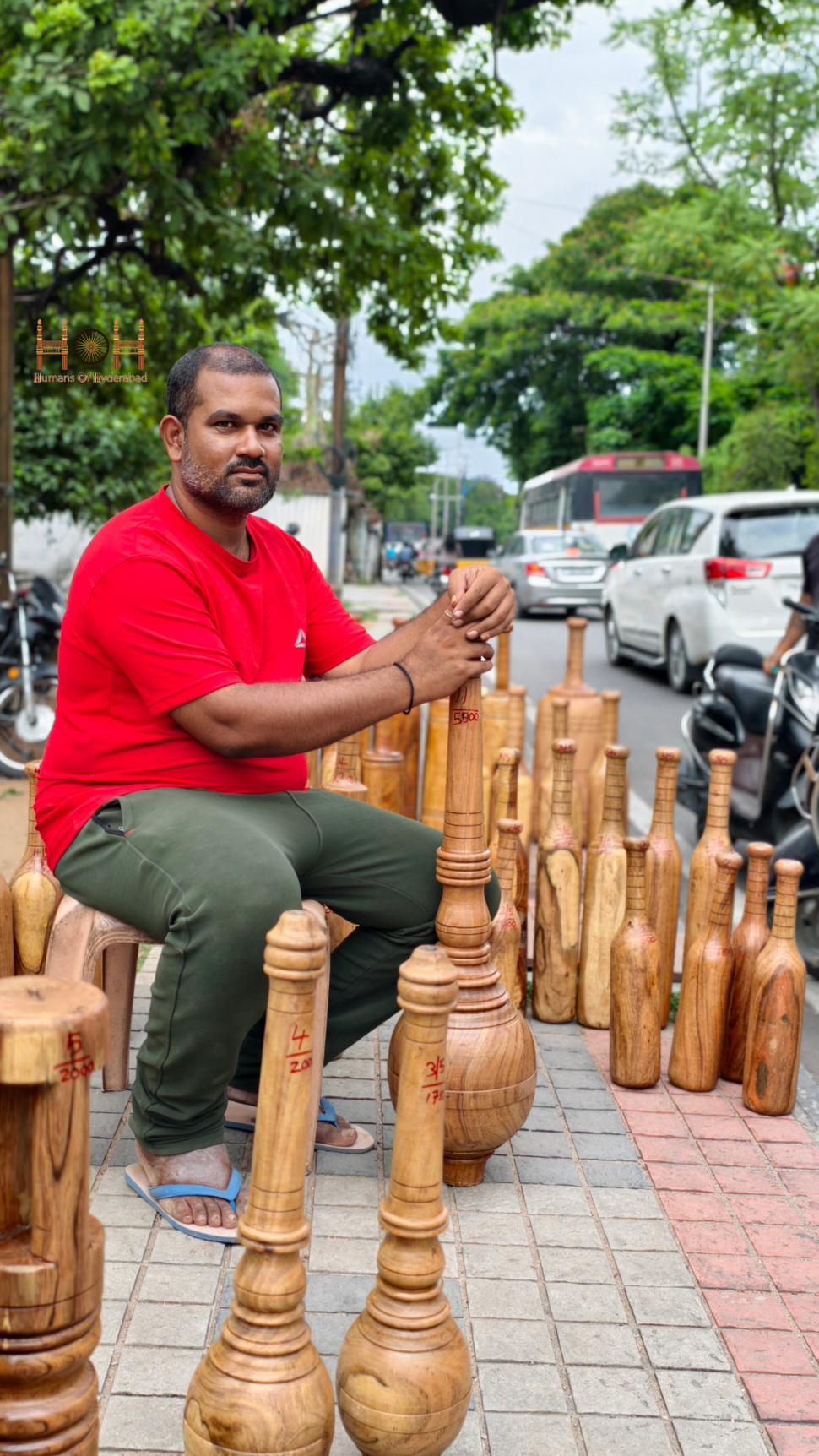
“Every day, people stop outside my shop, look at these wooden pieces and ask, ‘What are these?’
I tell them they’re called mudgars and jodiyan. Long before modern gyms and fitness machines, these were the tools wrestlers trained with in akhadas across Hyderabad and the Deccan.
My name is Mohammed Sajeed Ali, and this is what I have been making for years on OU Road in Tarnaka.
People often think it’s just woodworking. It isn’t. Every mudgar begins with carefully chosen hardwood. Once we decide its weight, the wood is cut, turned on a lathe, shaped, sanded and polished by hand. The hardest part is getting the balance right. If it’s even slightly off, it won’t swing the way it should.
A single mudgar can take nearly three days to finish.
I don’t do this alone. Four craftsmen work alongside me, and every piece passes through our hands several times before it is ready. Each one is weighed and marked because every practitioner trains differently.
There was a time when these were a familiar sight in akhadas. Today, many young people have never seen one before. They know dumbbells and gym machines, but not the tools that helped generations of pehalwans build strength, balance and endurance.
I never get tired of answering their questions. Even if someone doesn’t buy one, I hope they leave knowing that this tradition still exists.
People often remember Hyderabad through Charminar, Golconda Fort and its old streets. I believe its story also lives in places like this workshop, where old crafts continue quietly, one piece at a time.
Every mudgar we finish is more than a training tool. It carries years of skill, patience and a tradition that deserves to be remembered.
As long as there are people who value this craft, my team and I will continue making them—keeping a small but important part of Hyderabad’s pehalwani legacy alive.”