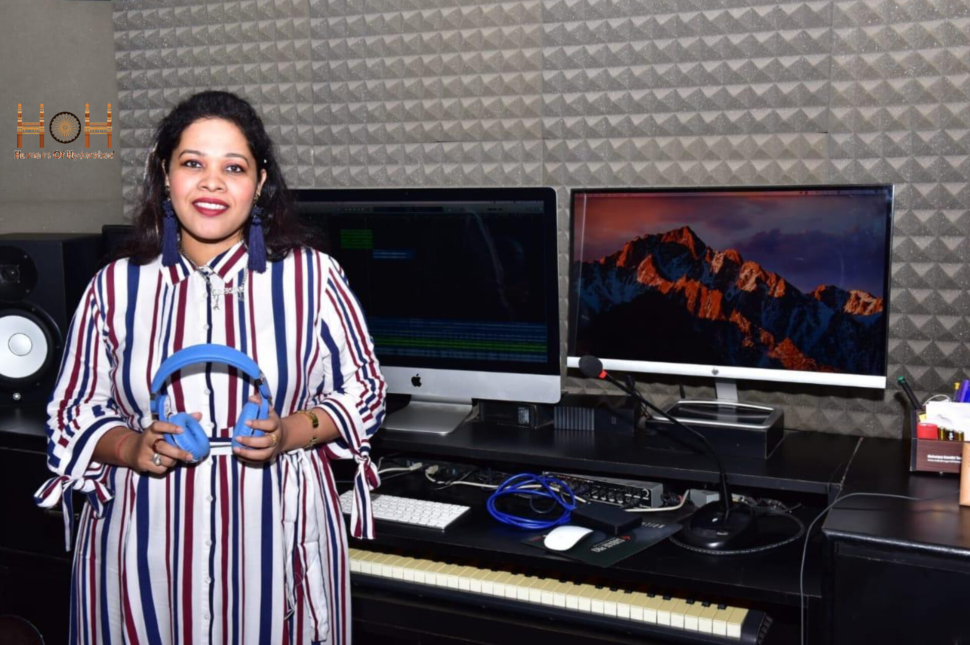
“Most people experience music as a feeling, but I see it as a science. I’ve always been fascinated by the mechanics of audio, specifically the raw, earthy sounds of folk instruments. In 2008, after completing a course in multimedia and animation, I happened to visit a recording studio with a friend. I was so intrigued by the equipment that the owners noticed my technical curiosity and offered me a chance to learn. That was the beginning of my five-year journey at Geetanjali Studio, working under music director Lalith Suresh. For the first two years, I wasn’t even allowed to touch a single fader. I spent my days training my ears to distinguish between twenty different layers in a track and detecting a frequency dip before I ever touched the dial. My presence in the studio was a constant reminder of the changing times; while some initially met me with skepticism, my professionalism and technical expertise quickly earned their respect.
To master this craft, I knew I needed a global perspective. I pursued a Post Graduate Diploma in Music from Trinity Guildhall University, London, where I trained in Western notations and piano. I balanced this with traditional Indian training, learning vocals under the tutelage of Seshulatha at Telugu University. These credentials gave me the technical vocabulary to bridge the gap between classical soul and modern engineering. My film career quickly took off, and I have supervised the dubbing, sound effects, and final mixing for over 60 feature films in five languages—Telugu, Tamil, Hindi, Malayalam, and Bhojpuri. Whether it was the background score for the National Award-winning film Adavi Na Talli Ra or recording for legendary directors, I viewed every project as a technical puzzle that validated my skill level as my strongest advocate.
The peak of that journey came in 2018. Standing at Rashtrapati Bhavan, I was honored by President Ram Nath Kovind with the ‘First Ladies Award’ on January 20, 2018, as India’s first female music technician—one of 112 women recognized for being the first in their respective fields. It was a moment of validation for a craft that usually remains invisible behind the screen.
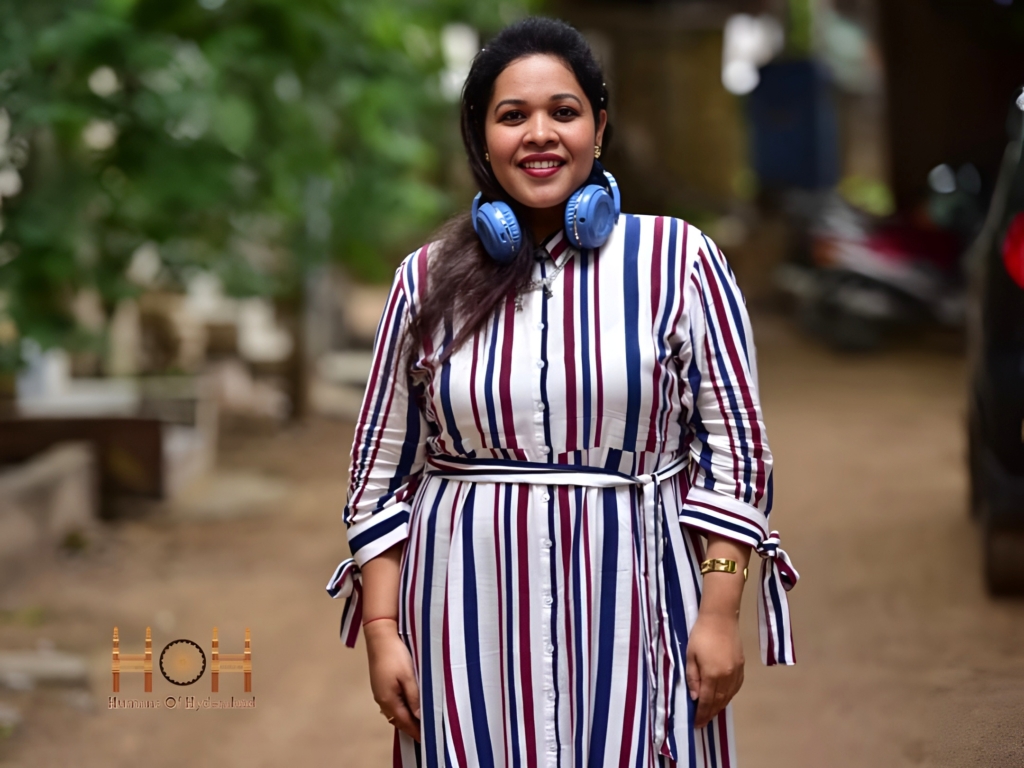
My journey as an audio engineer has always been about more than just managing sound; it has been about proving that technical mastery in the studio knows no gender. After years of supervising the dubbing, sound effects, and final mixing for over 60 feature films, my work as India’s first female music technician began to resonate far beyond the recording booth. I had spent a decade bridging the gap between traditional Indian instruments and high-fidelity global standards, and eventually, this dedication caught the attention of the highest offices in the country.
This national recognition was followed by the Telangana Visishta Mahilaa Puraskaram in 2019 and global acclaim through an interview in the international audiobook Women in Audio, published by Routledge in the UK. My journey has since been archived in the Indian Women’s History Museum (IWHM) and included in the ‘Top 200 Famous Indian Women Personalities,’ where my story serves as a case study for national competitive exams ranging from the UPSC to the SSC.
Today, as Dr. Sajida Khan—a title reflecting an Honorary Doctorate awarded for my two decades of contribution—my work through my studio, 6HTZ, has evolved toward social leadership and cultural preservation. Beyond film, I have earned numerous accolades, including the World Book of Records (UK) and the High Range Book of World Records (USA). I am currently on a mission to record and reproduce tribal folk melodies in collaboration with the Tribal Cultural Research & Training Institute. I travel to the heart of communities like the Thoti and Pardhan to capture instruments carved from wood and beads—unique rhythms that conventional studio presets simply cannot replicate. By creating high-fidelity digital archives of these melodies, I’m ensuring that our vanishing heritage becomes a permanent part of the global landscape. As an educator and advocate, I am dedicated to encouraging more women to enter technical fields, with the hope of one day staffing my studio entirely with women to reshape the landscape of audio engineering in India.”
- Dr. Sajida Khan, Audio Engineer