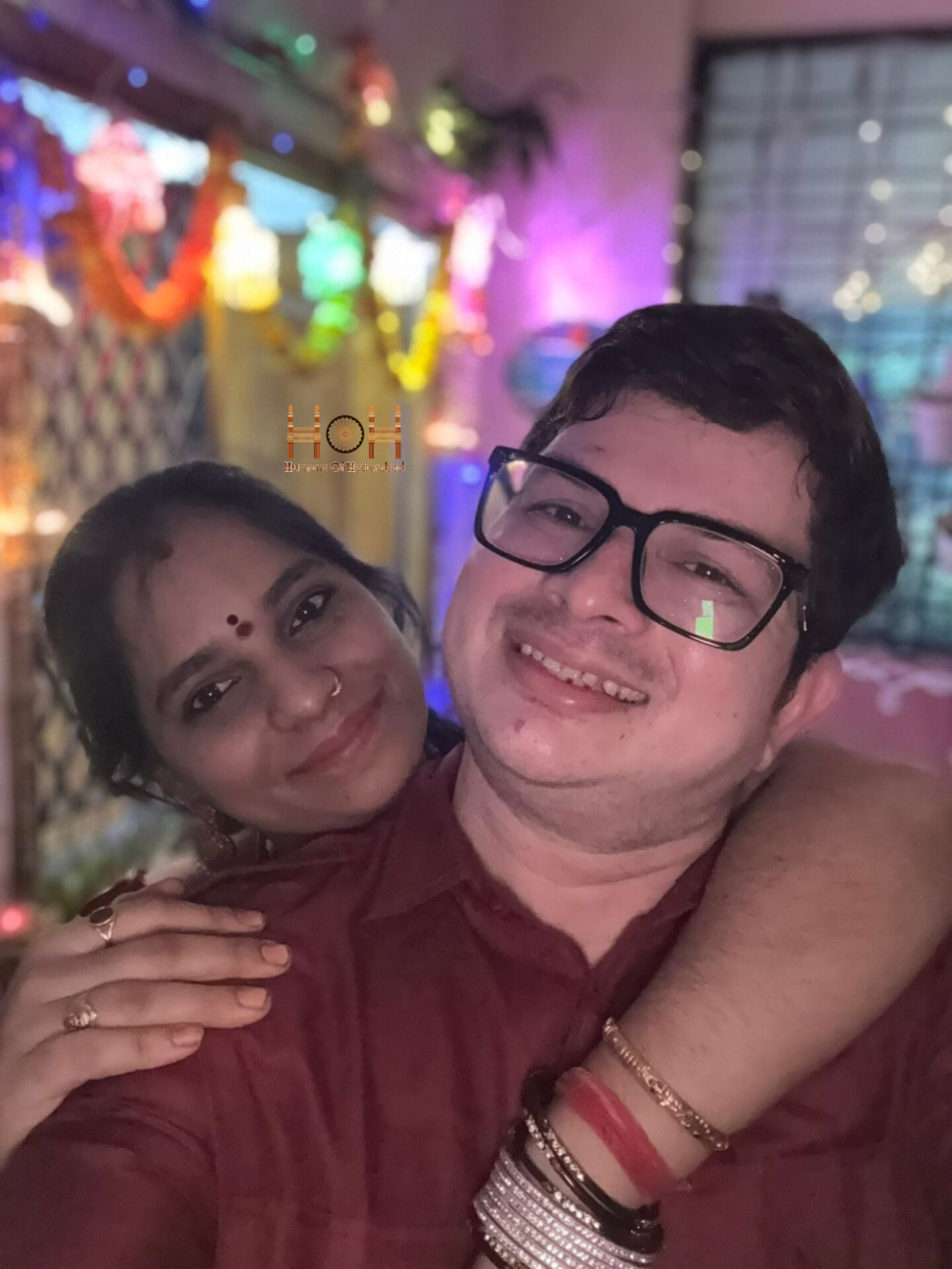
“Romance, as portrayed in popular culture, often adheres to a rigid script, a dance between masculinity and femininity, where the heroic male pursues the delicate damsel. This narrative has woven itself into our understanding of love, perpetuated by Bollywood films like Dilwale Dulhania Le Jayenge. From an early age, I was steeped in this binary notion of romance, where the masculine protagonist’s grand gestures captivated the feminine heart. As I grew, DDLJ’s influence remained, its Raj-like character seemingly the key to unlocking affection.
However, reality turned out to be more intricate than this cozy picture. My first relationship at 18 was anything but smooth sailing. I invested so much into emulating someone else that I lost sight of my authentic self. It was during this time that I came to terms with my bisexuality. I noticed that romantic attraction did not unfold the same way for both genders I was involved with. The typical romance narrative did not resonate. The emotions, heartbreaks and connections felt unfamiliar. Why did I not experience romantic attraction to men in the same way as I did with women? How could I connect romantically beyond traditional gender boundaries?
My evolving gender orientation caused me to reevaluate the concept of romance itself. I compartmentalised love, emotions and bonding, focusing solely on my sexuality. The romantic ideals I grew up watching felt incompatible with my nonbinary and gender fluid identity. Unable to fit into the masculine-feminine romance mould, I suppressed my romantic emotions. It seemed unnecessary, as I struggled to align with the societal notion of romantic gestures and heroic expressions. This discomfort ultimately led me to discover my demiromantic identity.
Discovering my demiromantic identity changed the way I understood romance.
Demiromanticism, part of the aromantic spectrum, refers to individuals who develop romantic feelings only when a deep emotional connection is formed. It stands in contrast to traditional romantic narratives and resonates with those who find love within emotional bonds.
My experience with demiromanticism began when I rekindled romantic attraction towards my partner, a connection nurtured by our strong emotional bond. She appeared to possess a greater capacity for romance from the moment we first met. That connection gradually grew through shared warmth and affection.
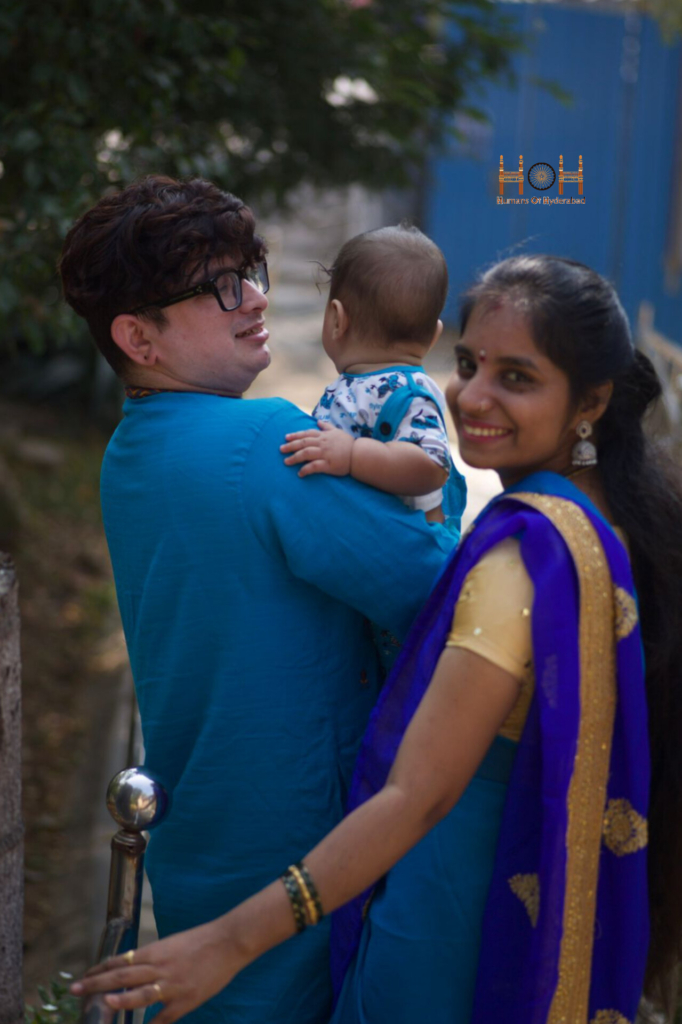
Our relationship evolved, with romance kindling as we nurtured our bond. She embraced my gender fluidity, rejecting traditional gender roles. Her act of painting my face for drag performances, or helping me drape a saree, took on heroic proportions, transcending the conventional notions of masculinity and femininity. As someone who effortlessly shifts between masculine and feminine energies, our connection defied these binary boundaries.
Post-marriage photoshoots often feature couples in stereotypical poses, holding hands, exchanging flowers. Yet we sought a more authentic representation, one that blurred these conventional lines. We set out to capture the essence of our unique bond. Our journey depicted raw emotion, void of gender labels, and transcended societal expectations. This endeavour, our own version of a DDLJ Demi Drag Love Journey, reflected the fusion of our demiromantic identity and the fluidity of love itself.
In dismantling the confines of the traditional romance narrative, we embraced the beauty of love beyond gender roles. Our story became a testament to the fact that love is a spectrum, capable of traversing boundaries and defying expectations.”
— Patruni Chidananda Sastry