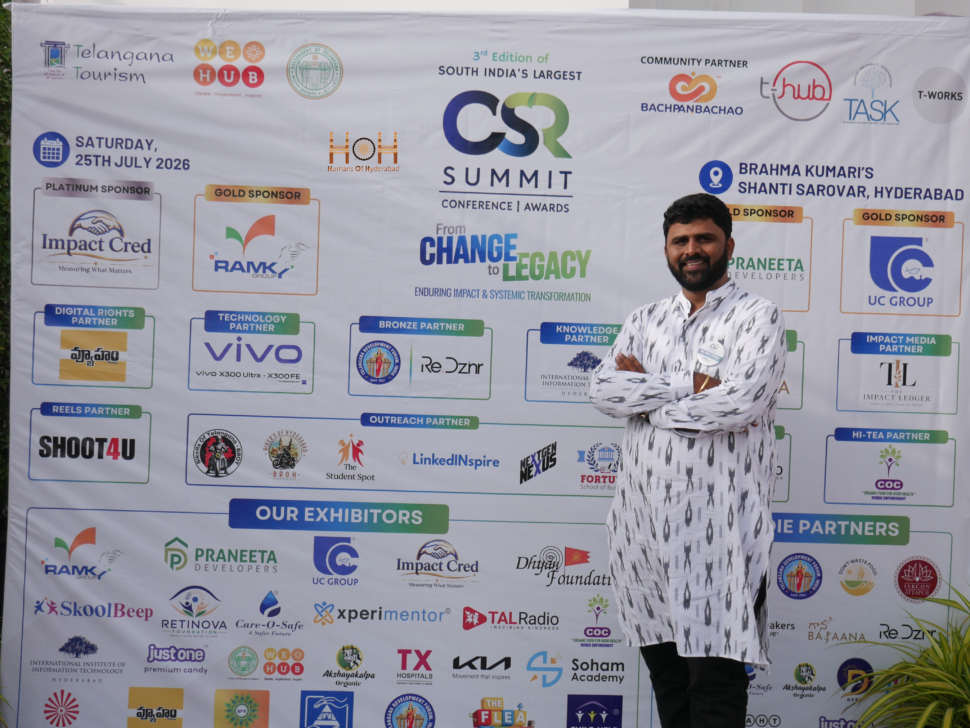
“If every young person gives even one or two hours a week to society, this country can progress faster than we can imagine. That thought began in my childhood and became real during my intermediate days, after a program on TV about children battling cancer left me with a thought that refused to leave me. One evening, my aunt turned to me and asked, “What can we do for them?” I didn’t have an answer then, but I knew I had to find one. How were families already fighting for their children’s lives expected to bear the crushing cost of treatment?
By my second year of Engineering, I turned that thought into an initiative on campus. We placed donation boxes across college canteens to collect students’ spare change. By the end of the month, we were raising close to 2 lakh rupees. We didn’t wait for formal requests; we went directly to Basavatarakam and Gandhi Hospital, identified patients in desperate need, and paid their bills on the spot. One moment from those days has stayed with me ever since: a four-year-old girl couldn’t be discharged because her family was short ₹22,000, and her mother had been crying for hours. We paid the amount and walked away. That day, I understood what it means to act when it matters most.
From one campus, the effort grew into volunteer chapters across Telangana and Andhra Pradesh. We organized health camps and collected surplus food from canteens and local restaurants, distributing meals around MGBS and surrounding areas to anyone needing a warm plate. Alongside all of this, I maintained a rigorous technical career. As an Avionics Engineer, I spent years maintaining aircraft systems, ensuring safety standards for domestic and international airlines, and designing flight software. My days would start at 3:30 in the morning just to balance those professional demands with ground-level social work. I even spent two and a half years in the United States on a student exchange program. Life there was comfortable, but it didn’t feel like mine. Even from abroad, I raised funds and sent them back to keep our projects running here. I eventually returned because I knew where I belonged.
In 2015, we formalized our efforts by building Abhisti Welfare Society alongside my brother Sunil and our friend Swarnalatha—a zero-fund organization run entirely on volunteer energy rather than corporate overhead. To ensure our social initiatives remained self-sustaining, I built separate ventures across software, construction, and events, channeling the profits straight back into our ground projects alongside 85 percent of my personal income.
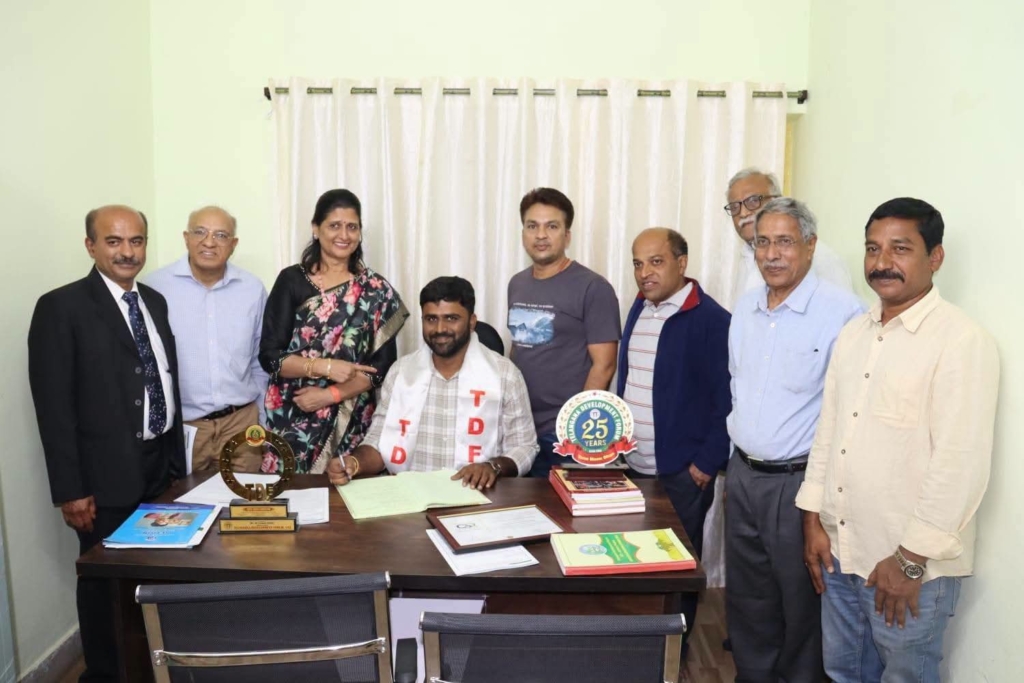
Today, I serve as the youngest General Secretary in the history of the Telangana Development Forum—an organization founded in 1999 with global chapters—and as President of the Association of Social Workers, connecting nearly 1,600 NGOs and over 40,000 social work students across India.
We also realized that despite mandatory corporate CSR requirements, massive funds were going unused every year simply because corporations and ground-level organizers never sat in the same room. We created a two-day model to fix that: on day one, the Sankalp Yatra, corporate leaders travel directly into districts and rural pockets to see real conditions firsthand. On day two, we host the CSR Summit, bringing corporate heads, NGOs, and government representatives to the same table. In Srikakulam alone, that approach unlocked ₹56 crores in ground commitments, and we are now expanding it into tribal regions across 12 states.
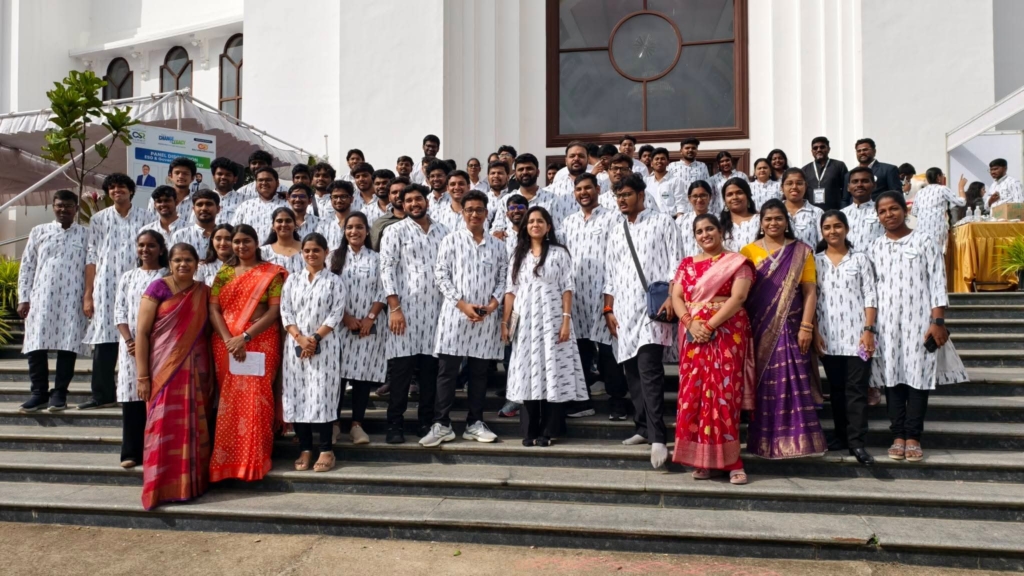
This July 25th, that journey came full circle at Brahma Kumari’s Global Peace Auditorium in Gachibowli, Hyderabad for the third edition of South India’s Largest CSR Summit under the theme ‘From Change to Legacy.’
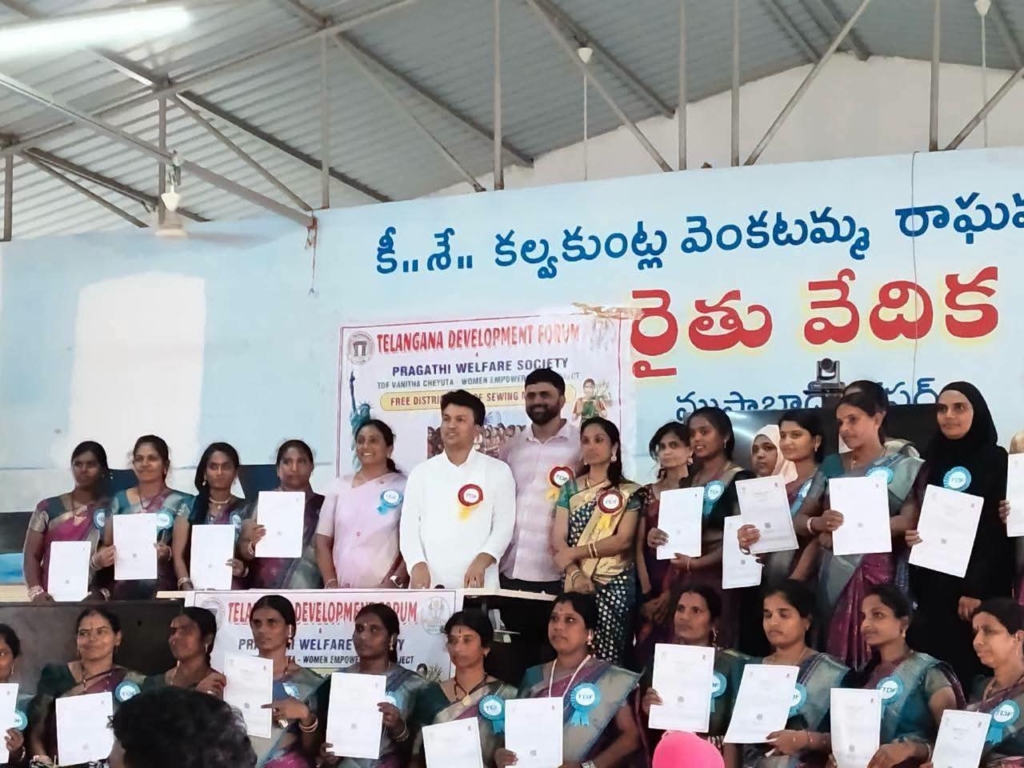
Our environmental and emergency work has expanded in tandem. Through Mana Panta Mana Vanta, we’ve worked across 86 villages in Telangana, Andhra Pradesh, and Odisha to preserve over 64 native rice and millet varieties with local farmers. During COVID, we set up 56 care centers—including dedicated ICU facilities for police personnel across Telangana—serving 20,000 to 30,000 meals daily and assisting with dignified cremations when families couldn’t be present.
I’ve been awarded 16 Governor’s Medals over the years, but money and honors were never the purpose. For me, it always comes back to standing beside people at the exact moment they need someone most—and showing that when young people give even a fraction of their time, progress stops being an abstract idea and becomes a reality.”
- Vinil Reddy Adudodla