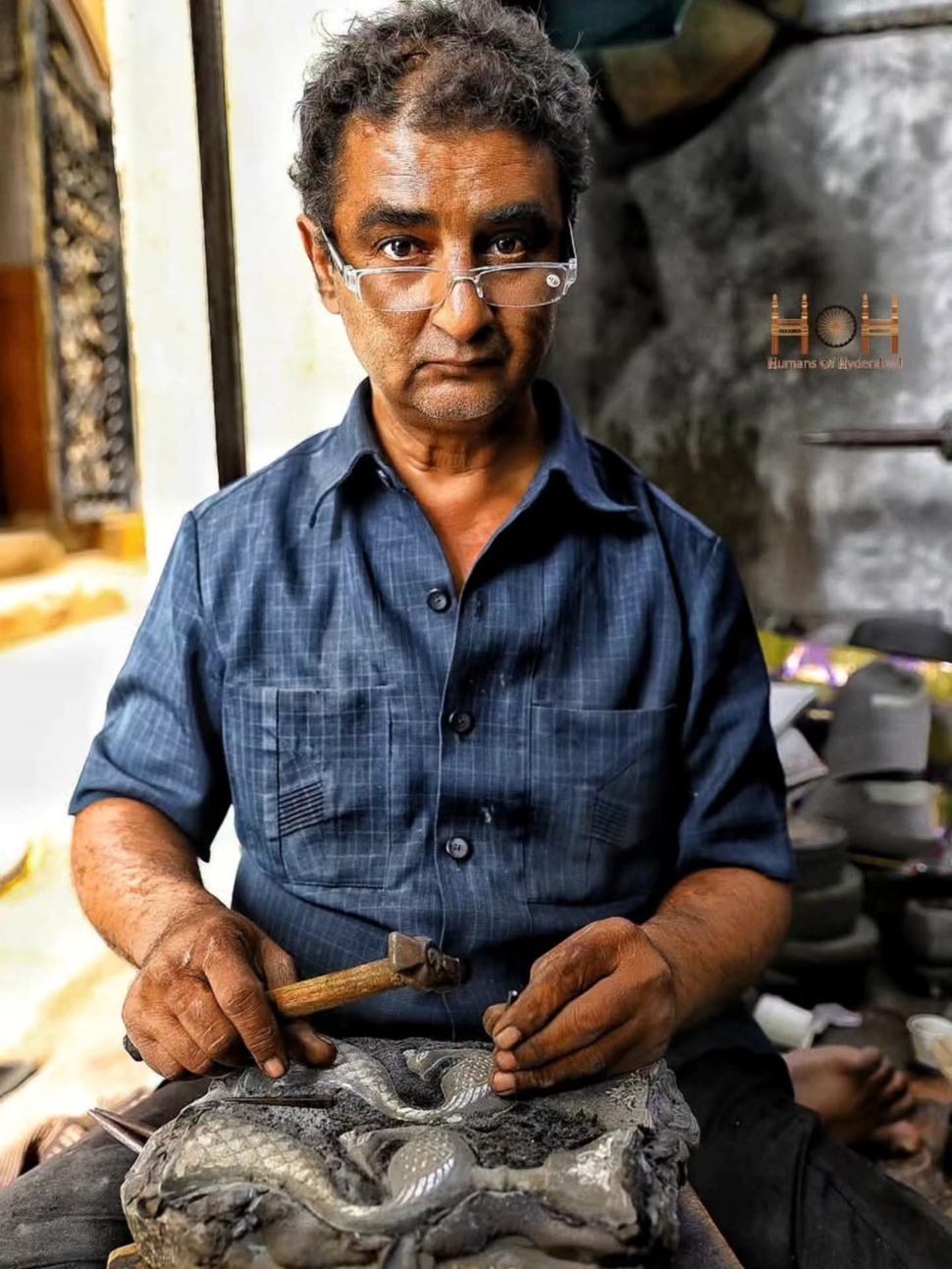
“I belong to a family that has been practising Bidri craft for generations. I learned this art from my grandfather and father, watching them work with metal and gradually picking up the techniques. Bidriware has a history of nearly 600 years, with its roots tracing back to Persia. The craft developed under the Bahmani rulers in Bidar and later received patronage from the Nizams, becoming part of Hyderabad’s rich artistic heritage.
The process of making a Bidriware piece requires considerable patience. It begins with preparing an alloy of zinc and copper, which is shaped into the desired form. We then engrave designs onto the surface using small chisels. These often include floral patterns, geometric arrangements and traditional motifs inspired by Deccani architecture.
The next step is inlaying pure silver wire into the engraved grooves. Each line and curve is worked on by hand, and even a small mistake can affect the final design. Once the silver work is complete, we apply a special soil sourced from the historic Bidar Fort. This gives the metal its characteristic black finish, making the silver designs stand out beautifully.
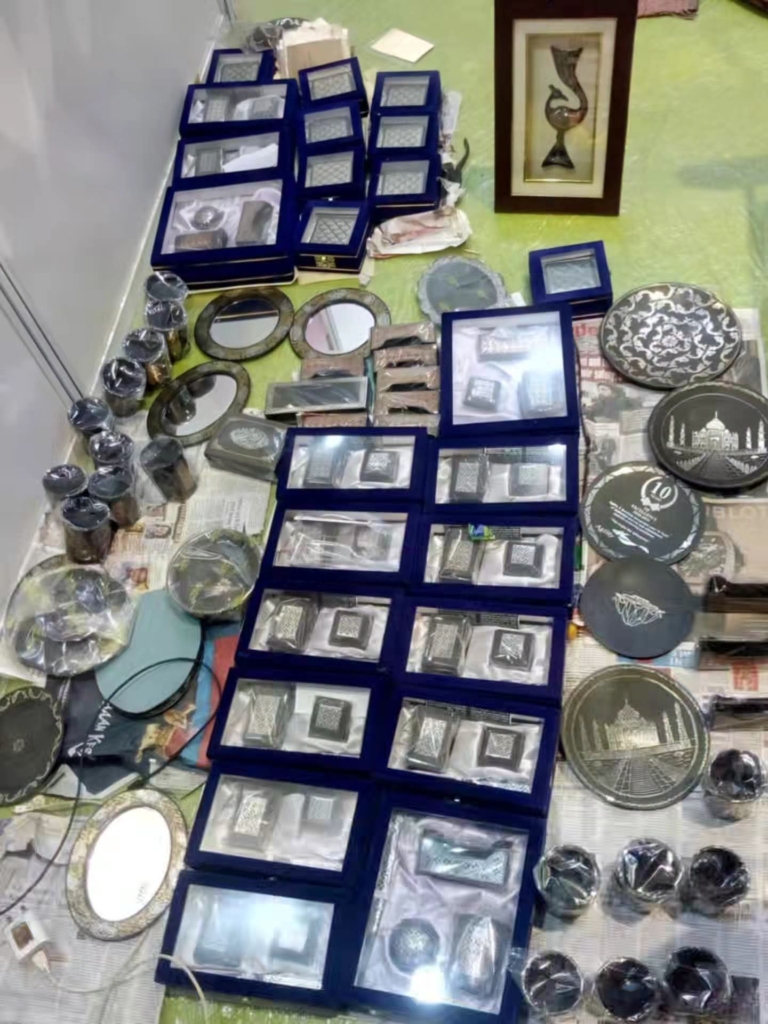
Today, keeping this traditional craft alive is becoming increasingly difficult. The price of silver has gone up, and sourcing the special soil required for the finishing process is not always easy. We also face competition from machine-made products and replicas that can be produced much faster. Despite these challenges, I am among the few master artisans continuing this craft in Hyderabad. I want the younger generation to understand its value and take an interest in learning it.”
- Khaleel Ahmed