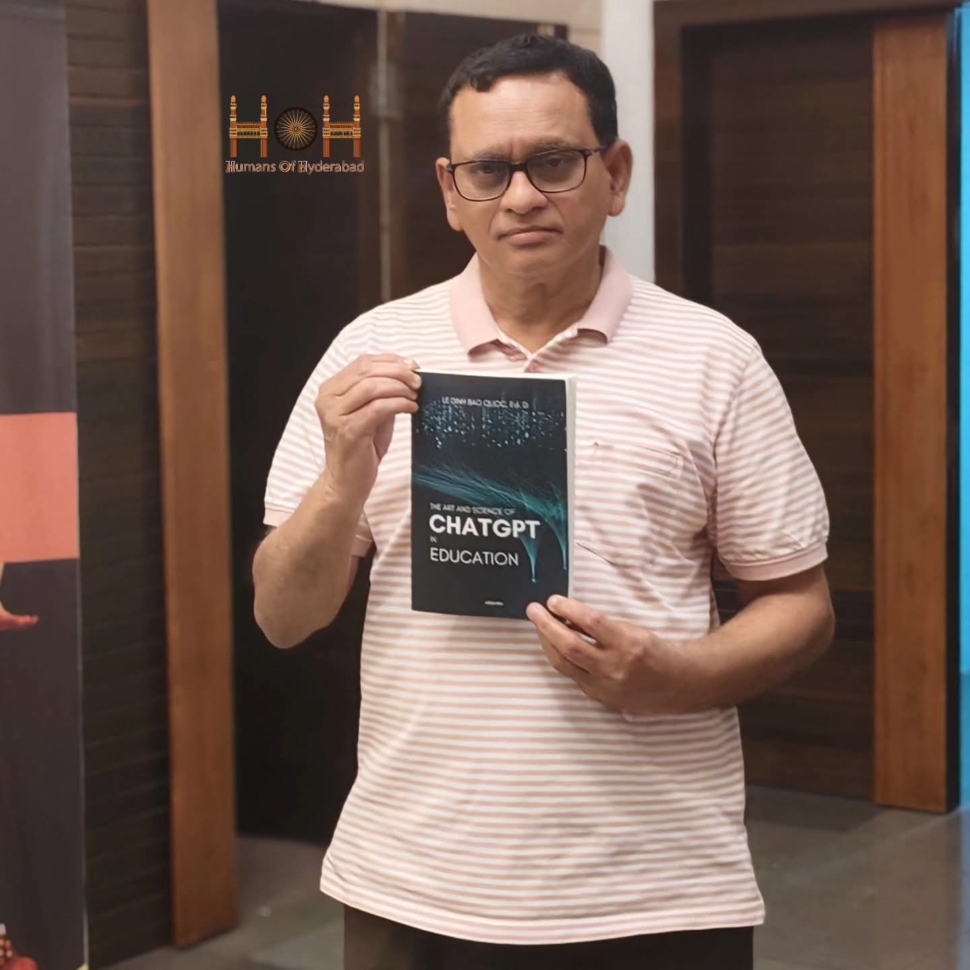
“I grew up in a small village near Gudivada with no exposure to technology, but plenty of room to imagine. After earning my B.Sc. in Electrical Engineering from NIT Jamshedpur, I joined Andhra University’s M.E. program—a turning point that placed me at the foundations of Indian computer science.
Under the mentorship of Prof. S.V.L.N. Rao, I delved into image processing and computer vision long before digital convenience existed. There were no online datasets; every research paper came from physical journals and every experiment required immense patience. I began my PhD in 1988, just a year after my son was born. While my wife managed our home and child almost entirely on her own, I spent long hours across laboratories, eventually completing my doctorate in 1991.
I soon joined Osmania University, serving over the decades as Head of CSE, Dean of Engineering, and Director of the 21st Century Gurukulam. My career mirrored India’s tech evolution—from the early IT push under Rajiv Gandhi to the massive engineering boom under N. Chandrababu Naidu, where I saw colleges in the region grow from 32 to nearly 300. This expansion democratized professional education for rural youth.
Reflecting on the ‘brain drain’ of the 90s, I believe it actually became ‘brain gain.’ Those who left for the US returned immense knowledge and economic strength to India. Today, as students look toward AI, I remind them that technology doesn’t just replace roles; it upgrades them. Just as we adapted to the internet, we will adapt to AI. It will enhance every field from medicine to law. While coding isn’t mandatory for everyone, AI literacy is becoming a core skill. By 2030, millions of Indian jobs will be AI-linked; starting this exposure early is a doorway to the future.
Looking back from my village roots to four decades in academia, I am grateful. My journey proves that your birthplace doesn’t define your destiny—your curiosity does.”
— Dr. Premchand Parvataneni,
Professor, CSE
University College of Engineering
Osmania University, Hyderabad