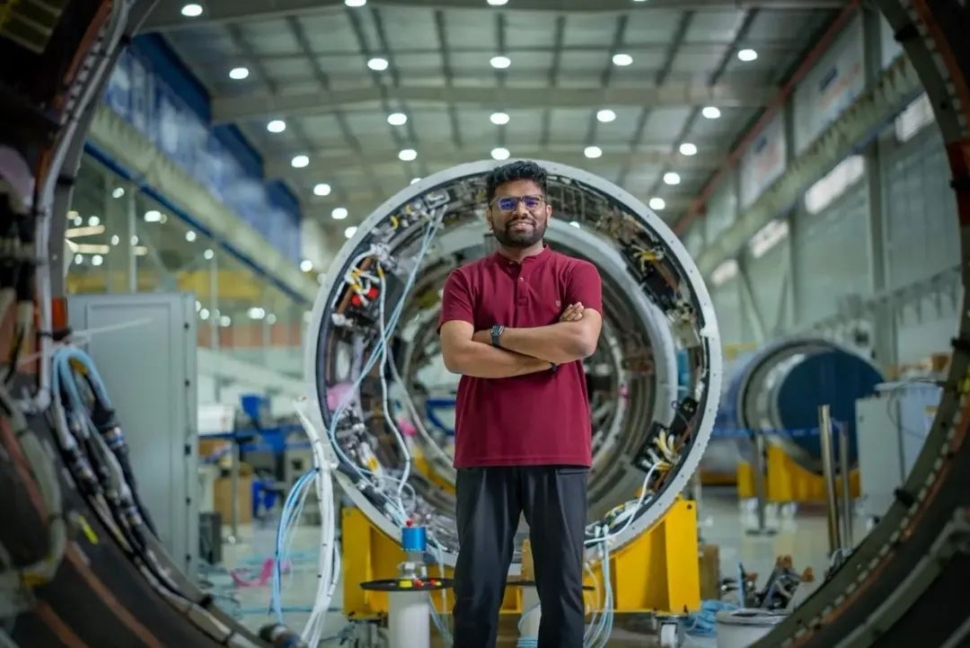
On the evening of July 18, Vikram-1 lifted off from Sriharikota on Mission Aagaman and climbed into a 450 kilometre orbit, making India only the third country in the world, after the United States and China, to achieve orbital launch capability through a private company. Prime Minister Narendra Modi called it a moment that would encourage countless young Indians to dream bigger and innovate fearlessly.
That moment belonged to an entire team at Skyroot Aerospace, scientists, engineers and technicians across propulsion, structures, avionics and control, whose combined work over the years came together in those few minutes of flight. Among them is Ratnendra Singh, a Hyderabad-based GNC (Guidance, Navigation, and Control) engineer, who worked to ensure the rocket always knew exactly where it was going, and exactly how to get there.
In his own words, here is his story.
“Around the age of eight or nine, I became fascinated watching ISRO’s INSAT satellite launches. Later, learning about Kalpana Chawla’s journey and the historic Chandrayaan-1 mission inspired me to pursue a career in space technology.
I pursued my degree in Aerospace Engineering at IIST Trivandrum. Coursework in subjects like space flight dynamics and control systems deepened my passion and commitment to the field.
Before Skyroot, I worked at Reliance Naval and Engineering and interned at Mahindra and Mahindra. Those early industry experiences instilled a strong sense of professionalism, rigour, and complete ownership over the work I deliver today.
The opportunity with Skyroot came right after I completed my M.Tech at IIST. From the day I joined, I had imagined what it would feel like to see our launch vehicle fly to orbit. Just 6 to 8 months into my role, we launched Vikram-S, a sub-orbital sounding rocket. Experiencing that firsthand was simply surreal.
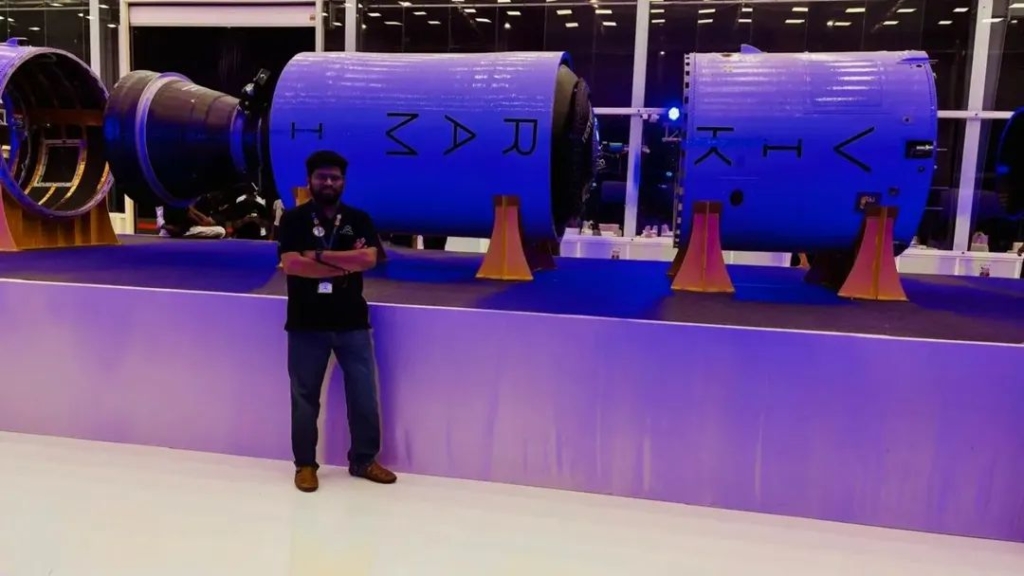
A 6DoF (Six Degrees of Freedom) simulation is essentially a complete mathematical representation of the Vikram rocket operating under the laws of physics, modeling exactly how the vehicle translates and rotates in response to external forces.
Paired with this are the Guidance, Navigation, and Control (GNC) algorithms, which act as the brain of the rocket, deciding where, when, and how it needs to maneuver to reach orbit. Combining the 6DoF model with GNC algorithms, we run millions of simulations to test and validate the rocket design and flight control software before launch.
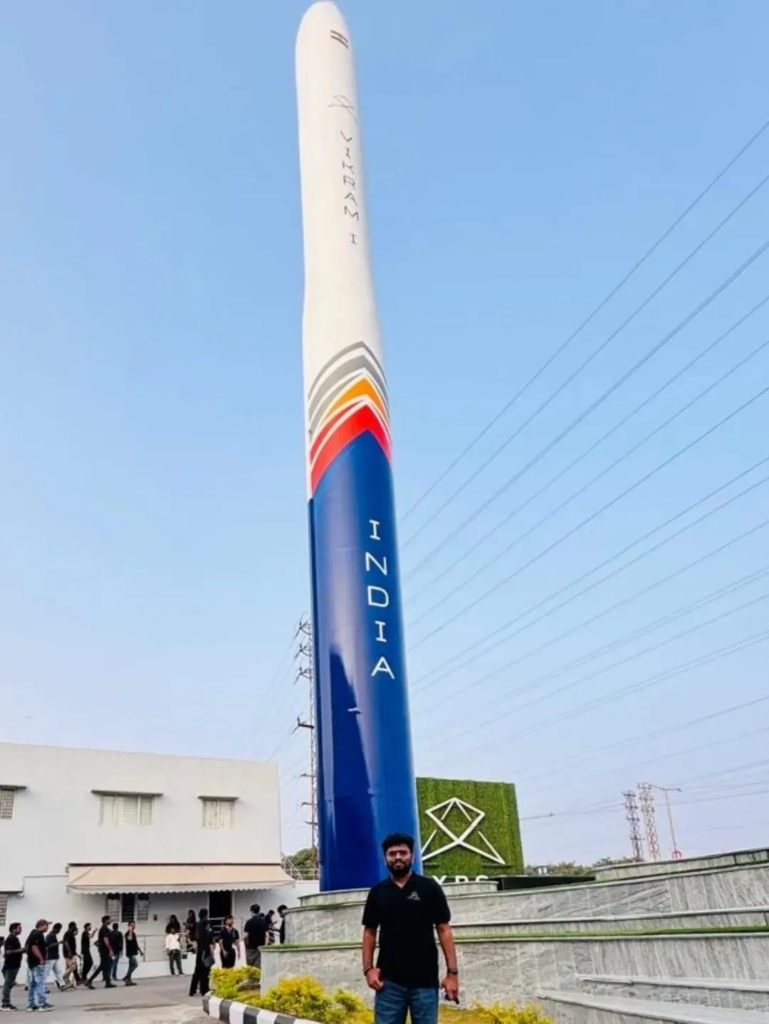
I was at the Skyroot Launch Control Center at SHAR, the Satish Dhawan Space Centre in Sriharikota, on the day Vikram-1 launched. In the hours leading up to liftoff I was running last-minute simulations, and during the flight itself I was monitoring the real-time behavior of the control systems.
It means everything to me. Knowing that the orbital stage we built is currently out there in space gives me an immense pride in what our team accomplished.
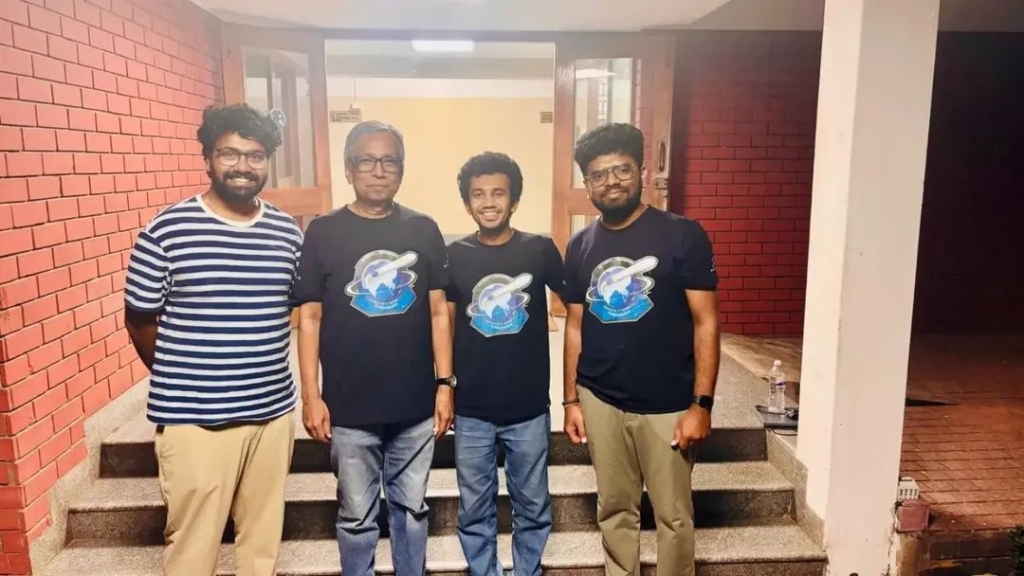
I am excited to give more than 100% toward our upcoming missions, helping ensure every future launch are grand successes.”
- Ratnendra Singh