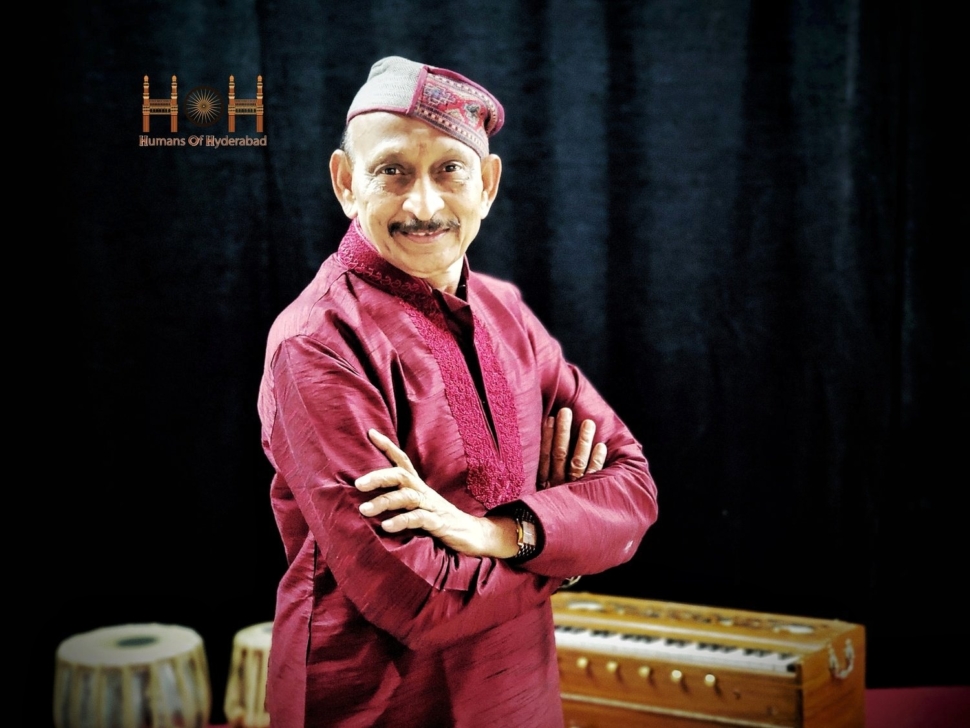
“Growing up, I often heard people say that classical dance wasn’t a path meant for boys. But I never let those opinions define me. It all started with Chhapalapate Nrityam, a regional folk dance I performed during Vinayaka Chaturthi in my neighborhood. My mother saw something in me that I hadn’t yet realized. In 1967, she took me to the Music and Dance College in Ramkoti, where I spent the next five years training under my Gurus, Pandit Ramakrishna Shukla and Pandit Vittal Rao. That was where I found my life’s purpose.
After completing my diploma, the Sangeet Natak Akademi invited me to Delhi for advanced training. When I finished, many people encouraged me to stay back, saying that was where the opportunities were. But I wanted to bring Kathak back to Hyderabad because this city is where my journey began.
When I returned, my friends and I travelled to towns across Andhra Pradesh, introducing people to Kathak. Many wondered why I was bringing a classical dance form from North India here. We never argued—we simply kept dancing. The journey wasn’t always easy, but the encouragement of legends like Dr. Nataraja Ramakrishna gave me the confidence to continue.
In 1982, I founded Kathak Kala Kshetra, the first institution of its kind in South India. Back then, Doordarshan was the only television channel, and seeing Kathak reach people’s homes was a proud moment. Over time, many came to recognize my work through those performances. Since then, I’ve had the privilege of taking this art across the world, including performing in the United States for three years and at the White House.
For the last few decades, I’ve devoted myself to developing the Deccani Style of Kathak. Inspired by the artistic traditions of the Qutub Shahi era, I blended them with the classical grammar of Kathak to create a style that reflects the cultural legacy of the Deccan.
Whether I’m performing on an international stage or teaching a student in Hyderabad, my purpose has never changed. Kathak is more than a dance form to me—it is a way of preserving our stories, our traditions, and a heritage that deserves to be passed on.”
— Dr. Anju Babu