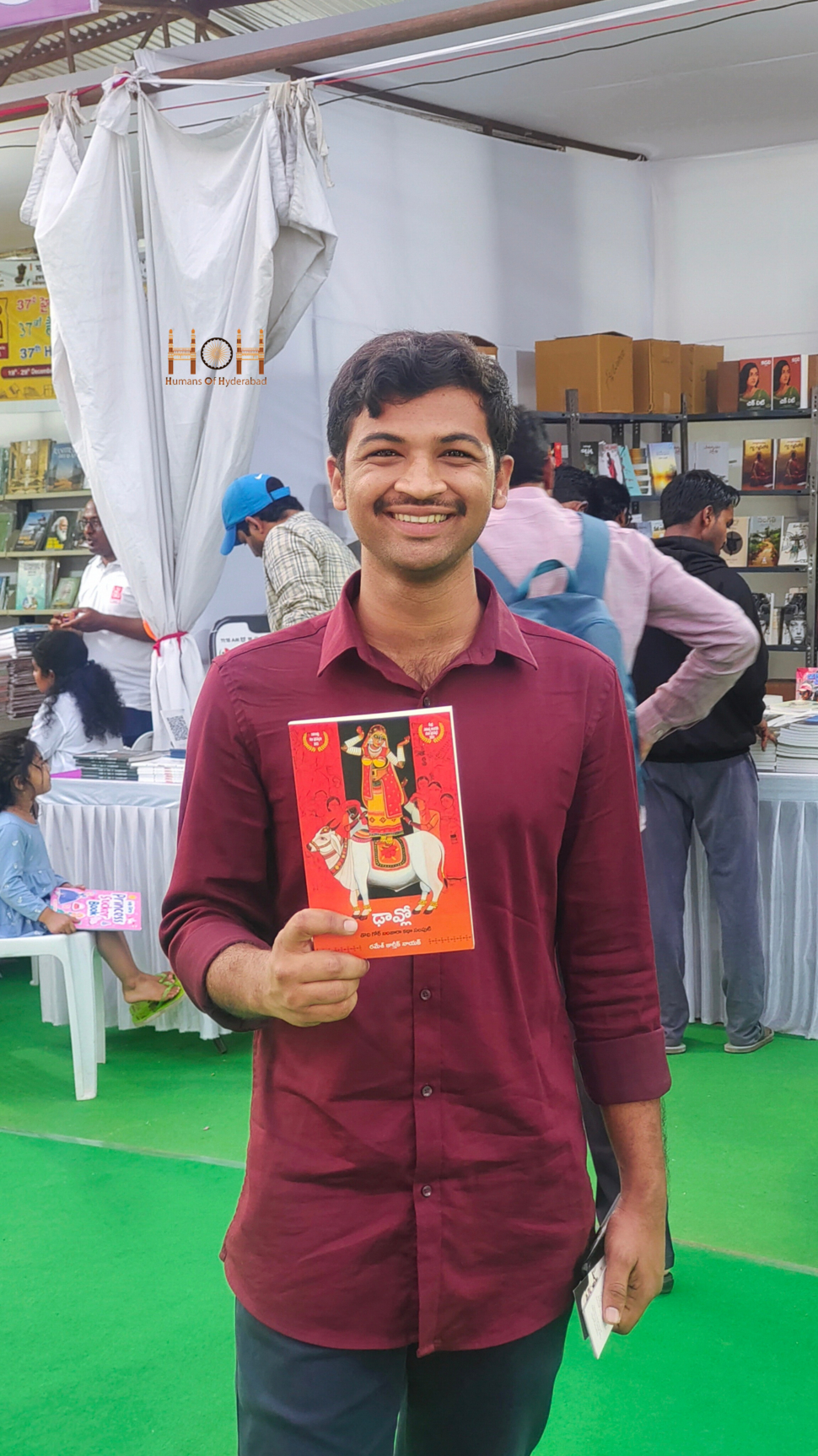
“Stories of the Banjara community have lived for generations through oral tradition, but they were rarely given space in Telugu literature. That silence is what pushed me to write.
My journey with literature began in 2009, during the Telangana movement. Those years made me question identity, history, and belonging. I began reading more, sketching, writing poems, and performing folk songs and dramas. Along the way, I realised how invisible Banjara voices were in the literary space. Toni Morrison’s words stayed with me: “If there’s a book you want to read, but it hasn’t been written yet, then you must write it.” That became my path.
I’m from Jakranpally, a village in Telangana. My father worked in the Gulf, while my mother laboured in the fields. To support myself through college, I took up catering jobs. Those early experiences shaped my writing—rooted in lived struggle, resilience, and quiet dignity.
I pursued an MA in English Literature, followed by an MA in Telugu at Osmania University. Over time, I began documenting Banjara life, culture, and survival. My books include Balder Bandi (2018),
Dhavlo: The Song of Lament (2021), Kesula: Flames of Forest (2021), and Chakmak (2023). In 2024, Dhavlo earned me the Sahitya Akademi Yuva Puraskar in 2024.
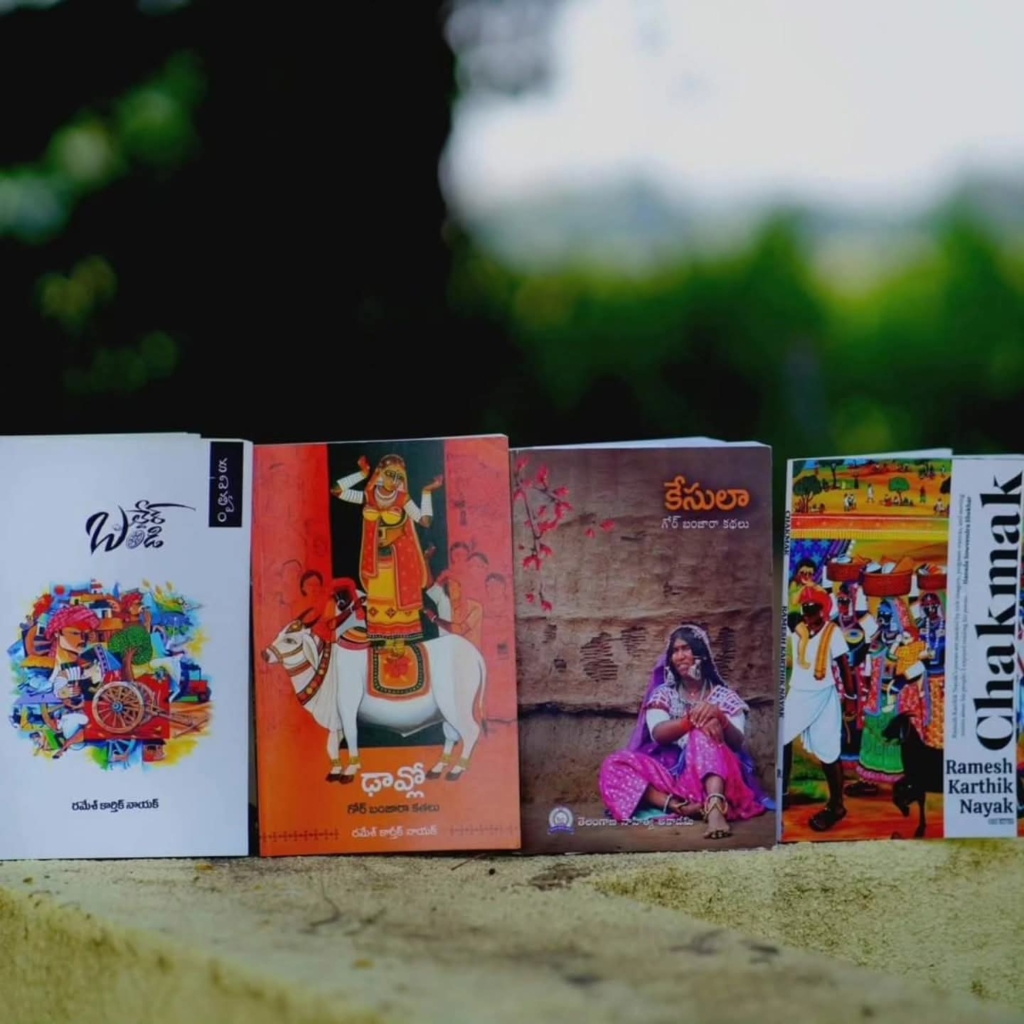
Today, Balder Bandi is part of the MA Telugu syllabus at Andhra University, and one of my poems is included in the Telugu curriculum at Sri Rama Bhaktha Gentela Narayana Rao Government Degree College. I’ve also received the Chilakamarthi Lakshmi Narasimha Puraskar (2018) and the Banjara Youth Icon Award (2021).
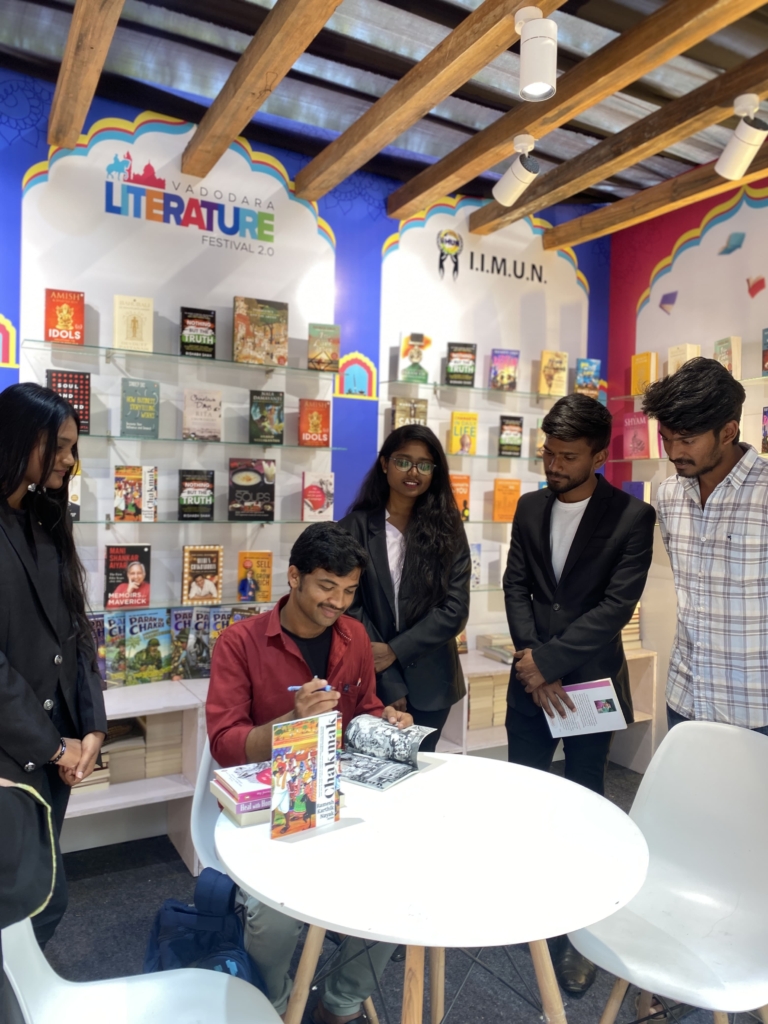
Recently, three of my poems were published in French translation in Apulée, a global literary journal. I also translated the poetry collection Kalala Rallu into Telugu, originally written by Nilim Kumar and translated into English as ‘I’m Your Poet’ by Dibya Jyoti. I now host the Aksharam on Doordarshan Yadagiri, where I engage with Telugu writers on literature and lived realities.

I want to preserve the songs, struggles, and stories of the Banjara people. We may have lived without modern comforts, but never without meaning. Our stories deserve space—on the page, and in the world.”
— Ramesh Karthik Nayak