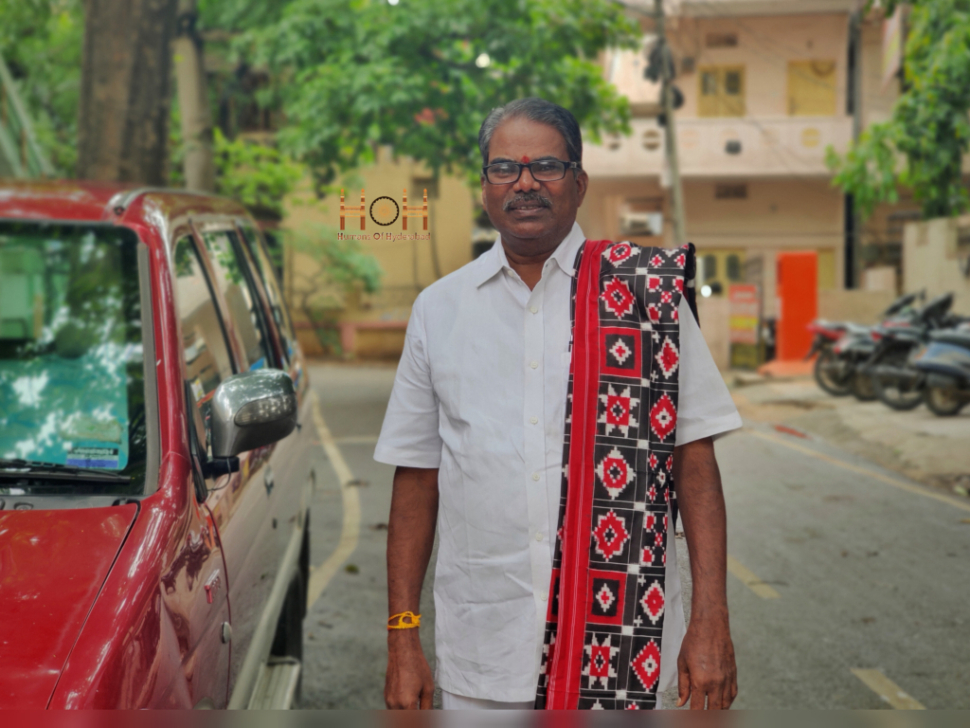
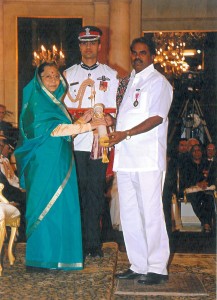
“I am Gajam Govardhana, a Padma Shri awardee and UNESCO-recognized master weaver from Puttapaka, Telangana. My life’s work has been to revive the Telia Rumal, a centuries-old double-ikat handloom textile once on the verge of disappearing. Before dyeing, the cotton yarn undergoes a weeks-long oil treatment using castor ash, sesame oil, and natural catalysts—a process that gives the fabric its distinctive texture and natural cooling properties. This painstaking treatment gives the fabric its distinctive texture and natural cooling properties. What was once a fading craft is today celebrated across the world, carrying a Geographical Indication (GI) tag awarded in 2020 and standing as a symbol of Telangana’s rich weaving tradition.

I grew up in a home where the tradition of handloom weaving was part of everyday life. As a child, I sat beside my father and siblings, learning how to prepare yarn, mix dyes, and understand the process that handloom weaving demands. By the time I was fifteen, I was weaving on my own—not because it was a profession, but because it was a tradition that had shaped generations before me.
My journey took a turning point when I discovered the Telia Rumal in Chirala, Andhra Pradesh. Determined to master its intricate double-ikat technique, I spent time learning the craft before bringing that knowledge back to Puttapaka. Instead of limiting it to the traditional rumal, I adapted the designs into sarees, dupattas, dress materials, and home furnishings, allowing the craft to evolve while preserving its original techniques.
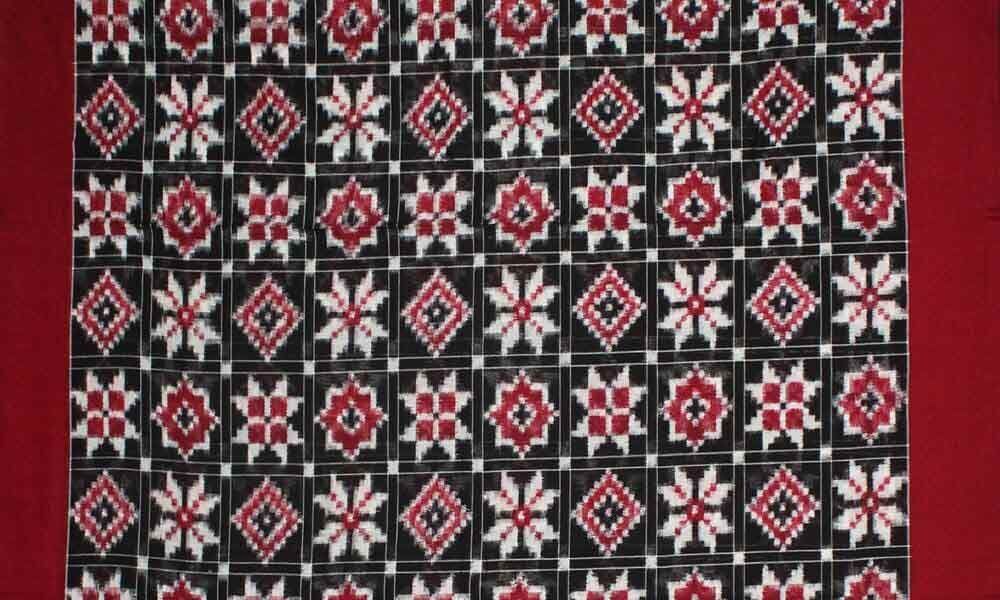
Every piece we create takes more than two months to complete. Each thread is tied, dyed, and woven with extraordinary precision so that the patterns align perfectly on the loom. It is work that cannot be rushed. Together with my family and fellow weavers, we continue this process by hand, ensuring that every fabric reflects the authenticity and craftsmanship our village is known for. Today, our creations reach customers across India and around the world, while our gallery in Hyderabad introduces visitors to the story behind this extraordinary tradition.
On this National Handloom Day, I don’t want people to remember my name. I want them to remember that every handwoven fabric carries weeks of patience, generations of knowledge, and the story of a weaver who refuses to let a tradition fade away.”