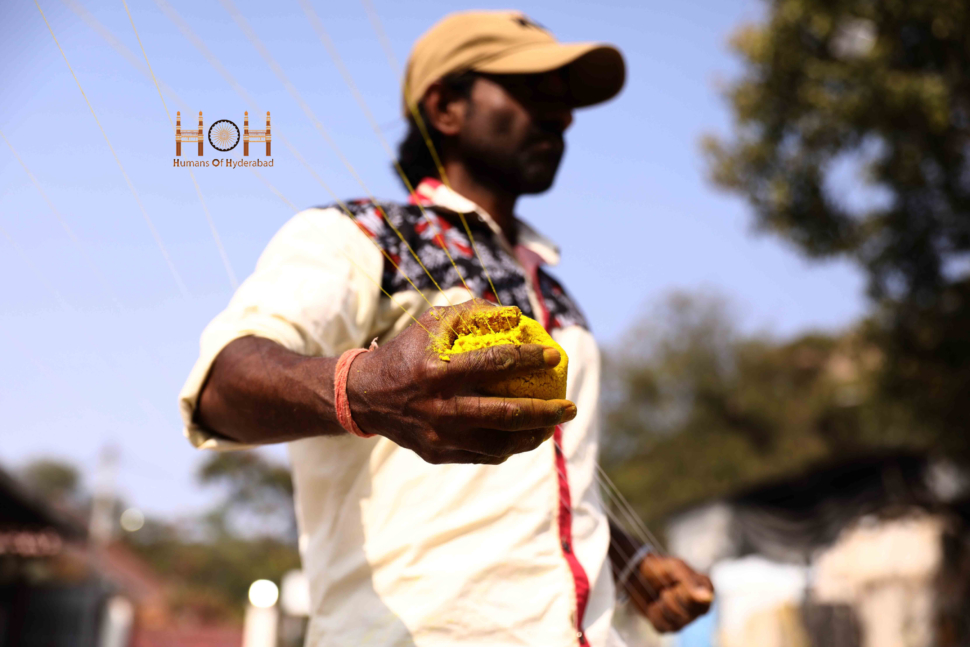
In the narrow lanes of Dhoolpet’s Mangalhat area, you don’t need a calendar to know Sankranti is coming—you just have to look up. While some are busy making handmade Patangs, others are stretching miles of thread across every available inch of terrace space. For the families here, these few weeks aren’t really about the holiday; they’re about earning enough to survive the rest of the year.
Rakesh Singh has been around this work since he was a kid. He was only 11 when he was first allowed to apply the paste. Now in his 40s, his life still follows the same rules his father lived by. “We don’t have machines to make manjas. It’s just our hands and whatever space we have,” Rakesh says. “If it rains for even an hour, we lose a full day’s work.”
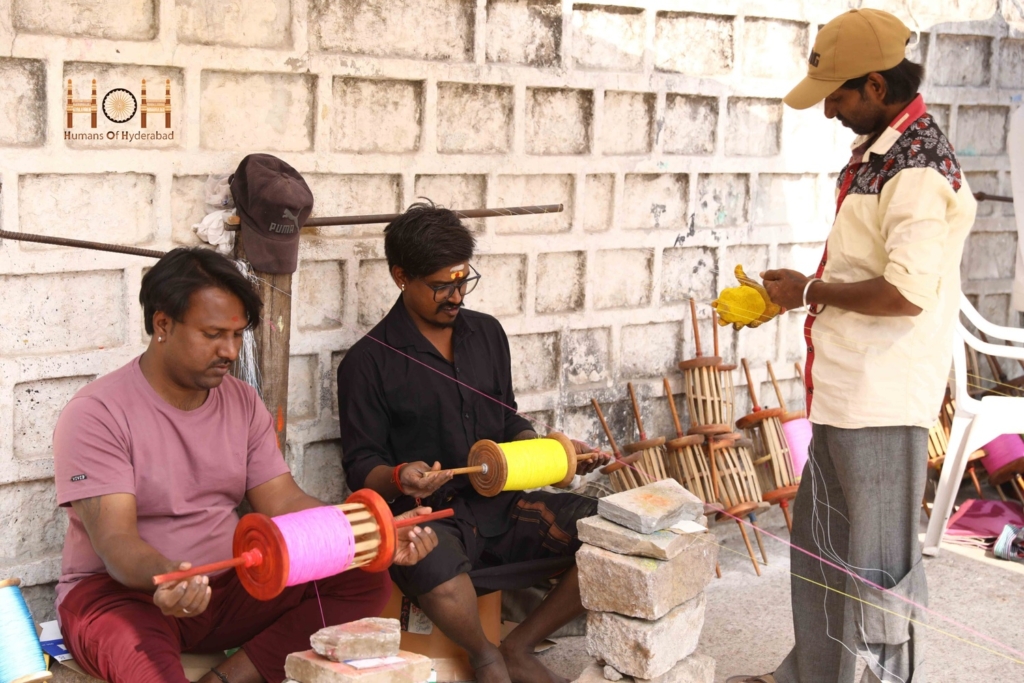
The work is grueling. They sit over coal stoves, stirring rice starch and soap powder into a thick, sticky paste. When the crushed glass goes in, they tie old handkerchiefs over their faces, but it never really helps. The fine dust settles on your skin like salt and stays in your throat for days.
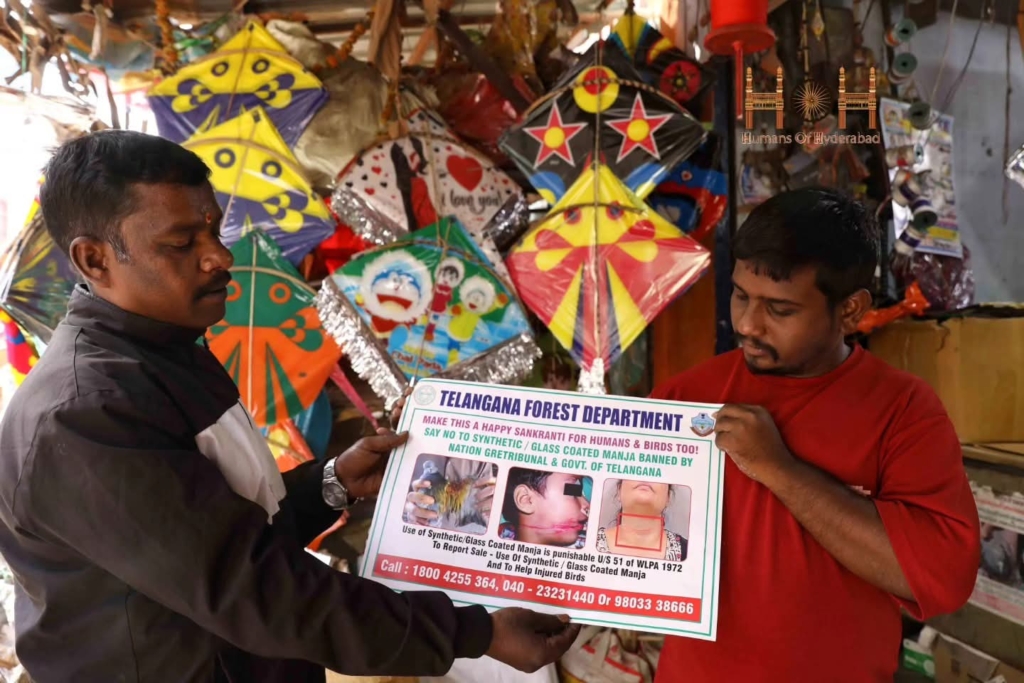
For a while, it looked like this craft would die out. Cheap nylon ‘Chinese’ manja flooded the market, but it was lethal—it didn’t just cut kites; it cut through bird wings and even people’s lives. The ban by the Telangana government eventually brought the demand back to Dhoolpet’s cotton thread, though police raids on illegal sales continue even now—but the struggle didn’t end. Coal is expensive now, and as the neighborhood gets more crowded, even finding an open terrace to dry the thread has becomes difficult.
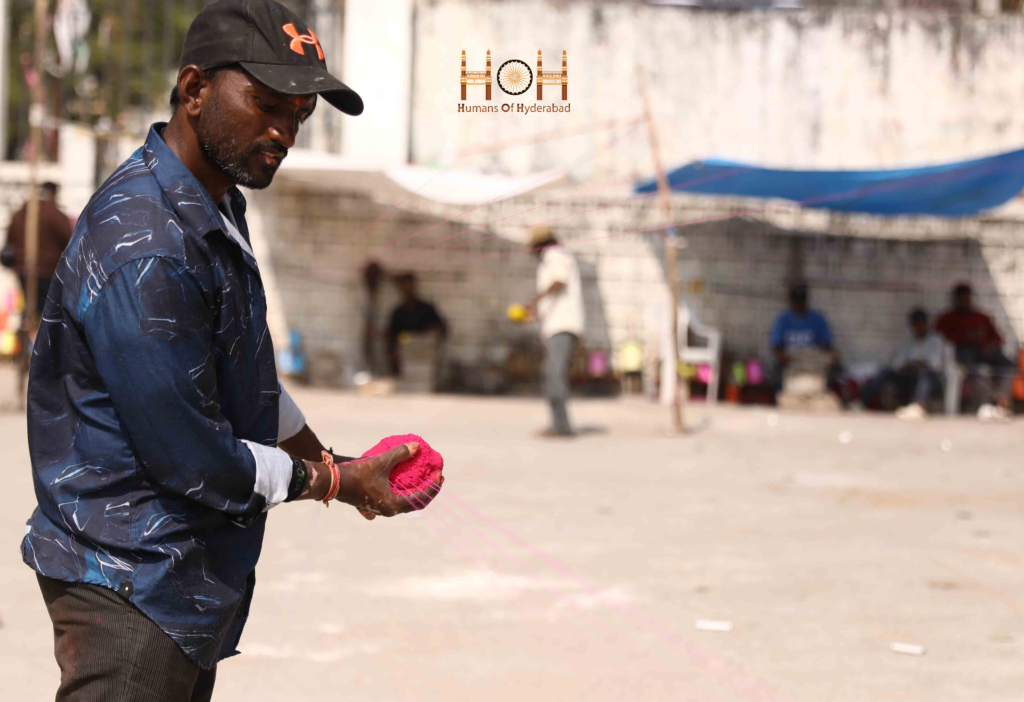
“People see the crowds and think we’re making huge profits,” Rakesh says, his hands stained with color. “But the truth is, this money is usually gone before we even touch it. It goes to our children’s school fees, old debts, and groceries. By February, the work vanishes. Most of us go back to daily labor or odd jobs just to keep the kitchen running until the next winter.”
As the festival approaches, the work in Dhoolpet continues. The market might be full of festive spirit, but behind the scenes, it’s just tired hands and the hope that one season’s earnings will carry them a little further.