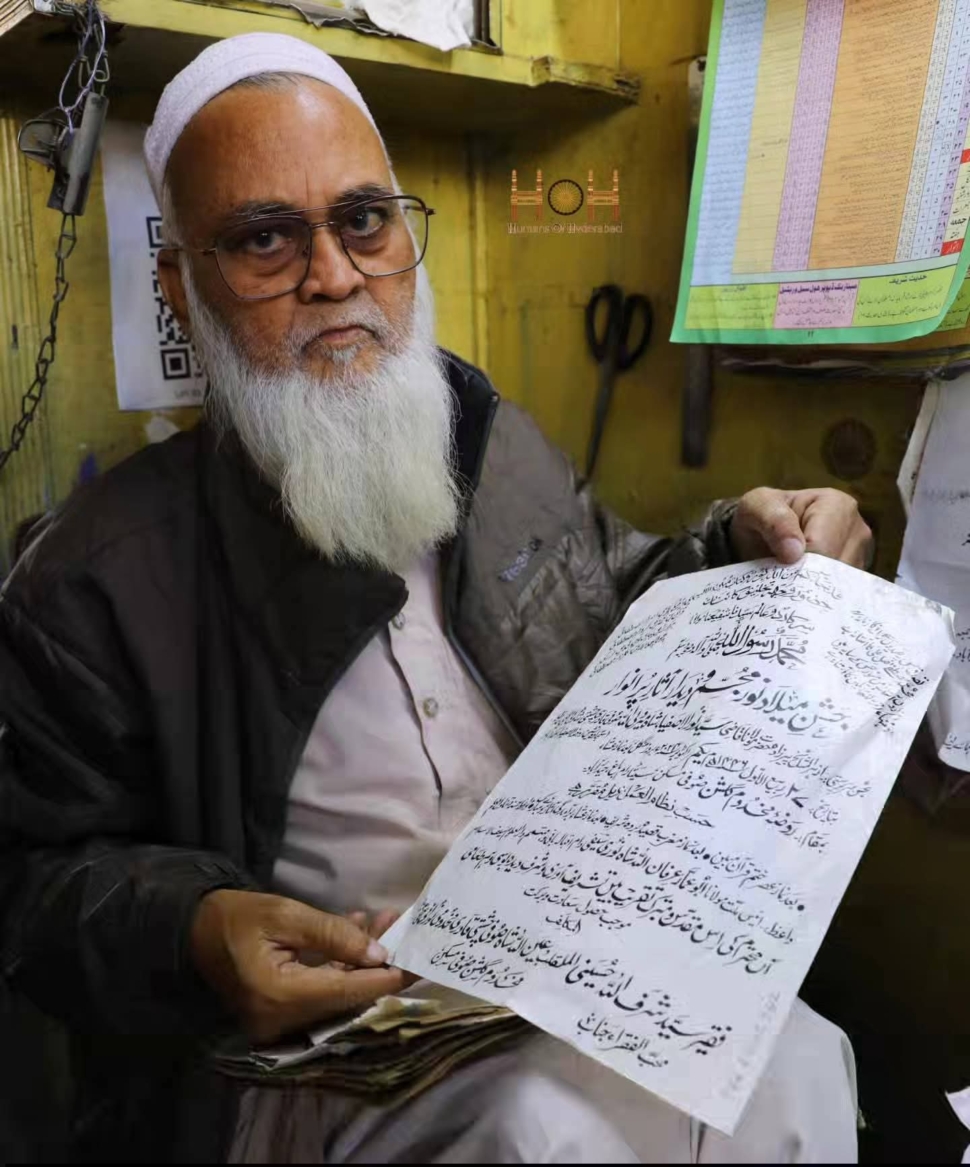
“For more than thirty-five years, I have opened my shop, Welcome Printers, in the lanes of Chattabazar, not far from Charminar. I sit at the same wooden table, place a blank sheet in front of me, dip my pen into ink, and begin. Urdu. Arabic. English. One letter at a time.
People often tell me, “Why don’t you use a computer? It’s quicker.”
They are right. It is quicker. But this work was never meant to be rushed.
I learned calligraphy from my father. As a boy, I would sit beside him and watch his bamboo pen move steadily across paper. He did not allow hurry. He used to say, if your mind is restless, your letters will show it. At that time, I only watched. Now I understand.
Even today, if I write the same word twice, it will not look exactly the same. Each piece carries the moment in which it was written. I follow the Khushkhati style. The letters stretch and lean into one another. They have rhythm. A computer can produce identical copies. My hand cannot. And that difference matters to me.
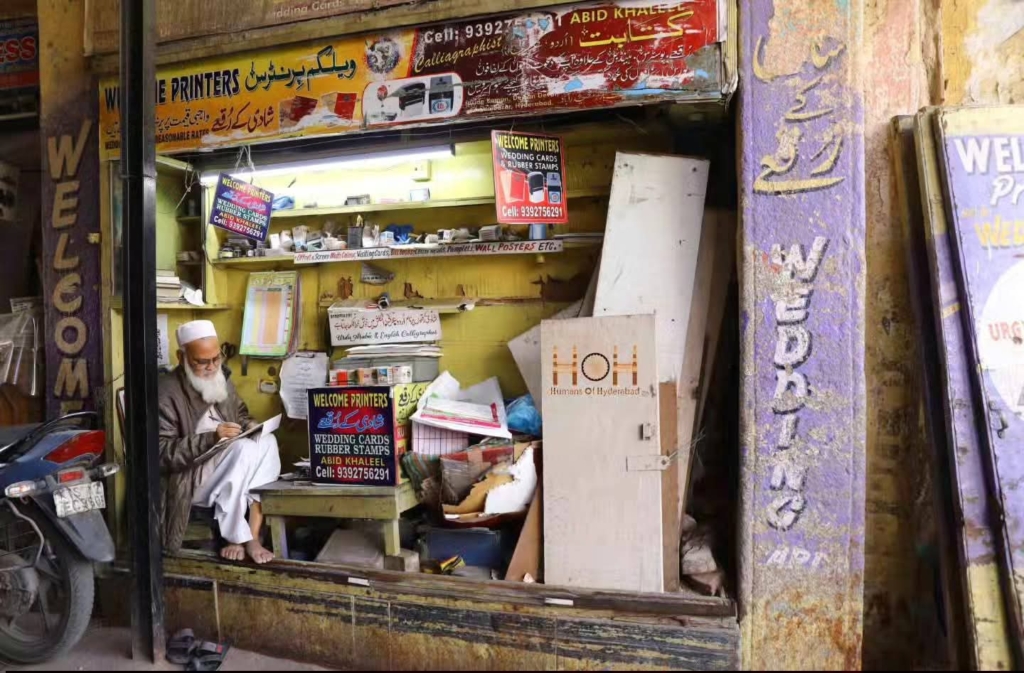
Outside, Chatta bazar remains busy. Wedding card shops stand side by side. Customers step in and out. Shopkeepers call out from their doorways. Just nearby, Mehboob Radio still repairs old radios. Some trades continue quietly, even as the city changes.
Inside my shop, the pace is different. The fan turns slowly above me. Ink leaves its mark on my fingers. Paper waits under my palm. When I bend over a fresh sheet and begin writing, the noise outside fades. I feel connected to the older writers of Hyderabad, to a time when every letter had to be written by hand.
The pens I use are not easy to find now. I have kept them carefully for years. Orders still come—posters, wedding cards, visiting cards. I handwrite names on envelopes before they are scanned and printed in bulk. I work nearly twelve hours a day. This is steady work, built on trust and practice.
Sometimes a line comes to mind:
“Har harf mein hai ek kahani, har naqsh mein hai ek rooh.”
Every letter has a story. Every stroke carries a soul.
People ask about the future of calligraphy. I do not give long answers. If there is support, it will remain. If not, it will slowly fade. Arts like this need attention, but they rarely receive it.
For now, I am here. My table is here. The ink still flows.
My name is Mohammed Abid Khaleel.
And this is my work.”