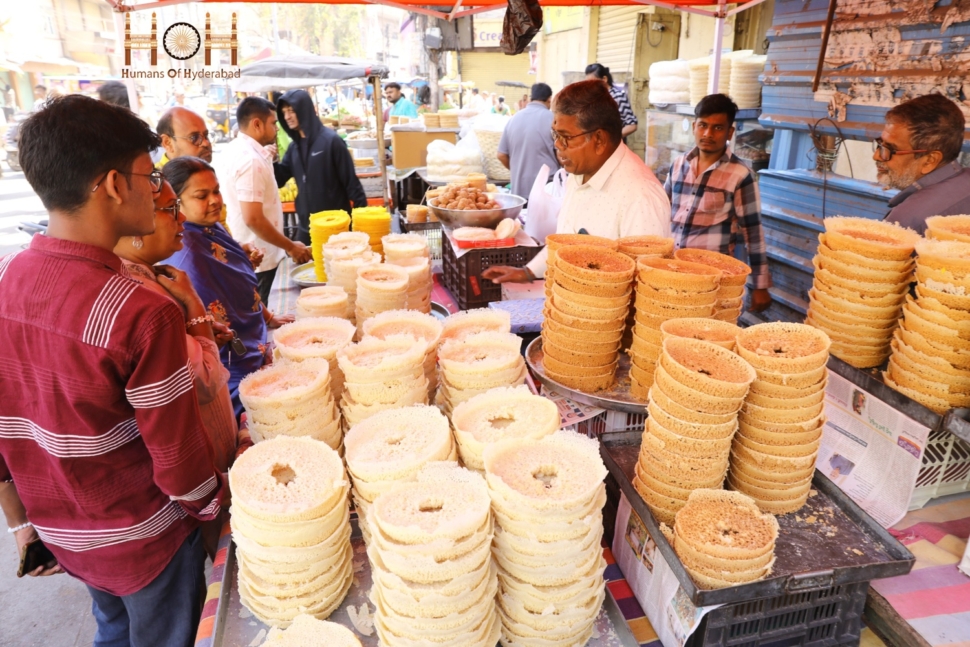
“We come from a Rajasthani community where Ghewar sweet marks every major celebration — especially Teej, Raksha Bandhan and Sankranti. When many families from our community moved to Hyderabad decades ago for work, they brought this craft along with them. Slowly, Ghewar became a seasonal presence in the old markets of the city.
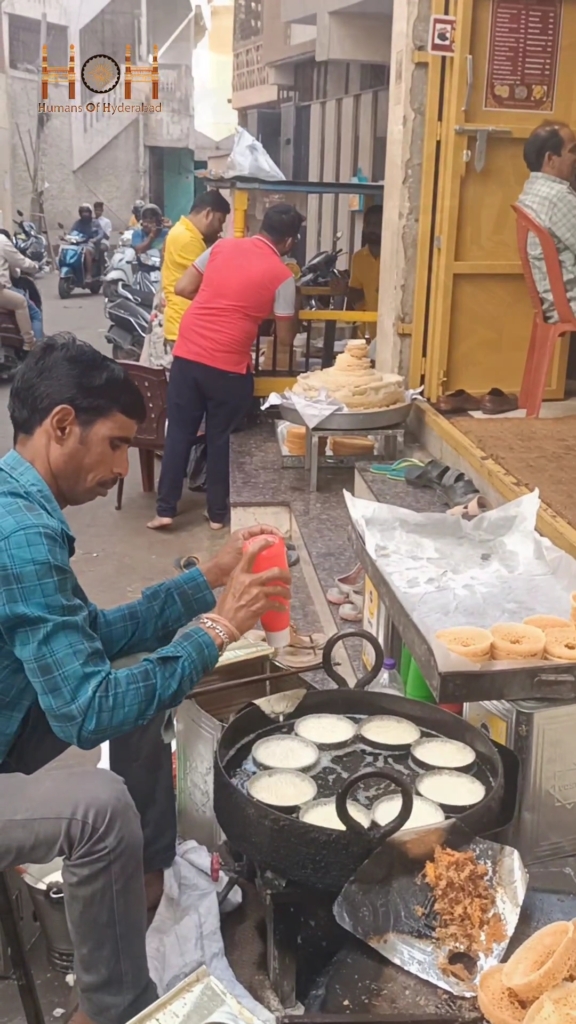
In Begum Bazar, our group has been preparing Ghewar the same way it was made back home. The recipe uses a thin batter of maida, ghee, water and milk, poured steadily into hot ghee so it forms natural holes and crisp layers. The method is simple but needs practice — heat, timing and patience decide everything. Once the disc turns golden, it is dipped lightly in sugar syrup and set to cool.
Sankranti is the only time of the year when we make Ghewar in large quantities because this is when families — especially those from Rajasthan who have settled in Hyderabad — come looking for it. For many of them, picking up Ghewar from Begum Bazar is a habit passed down from their parents and grandparents.
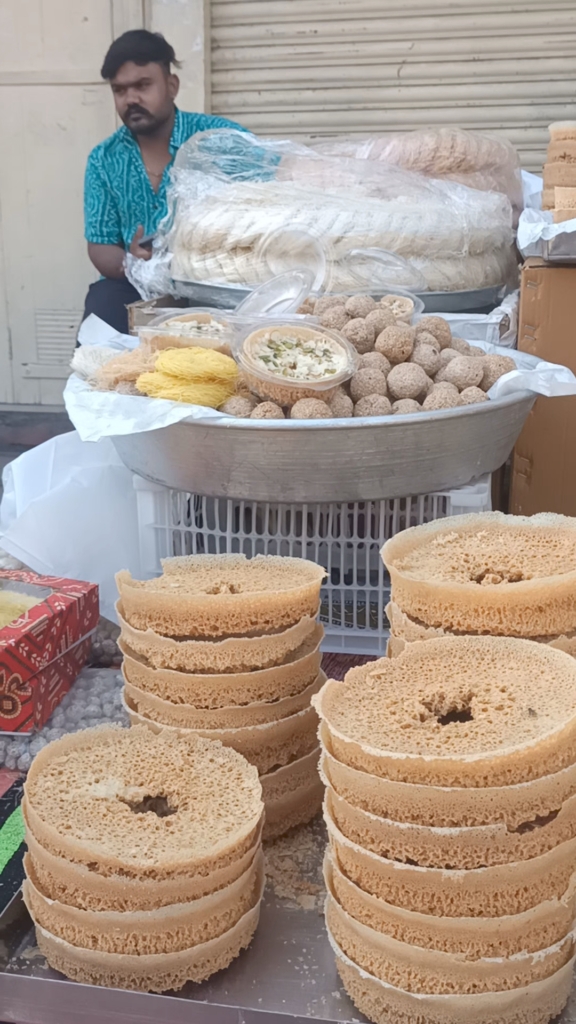
We prepare the main varieties people ask for during this season: Plain Ghewar, Malai Ghewar, Rabri Ghewar, and the Mawa and Dry Fruit versions. Alongside this, we also make seasonal sweets like tilgul, pheni and gondh ladoo that complete the Sankranti spread.
For us, this isn’t just a business. It’s a continuation of a craft our elders taught us. Every year, during Sankranti, making Ghewar in Begum Bazar feels like keeping a small part of Rajasthan alive in Hyderabad.”