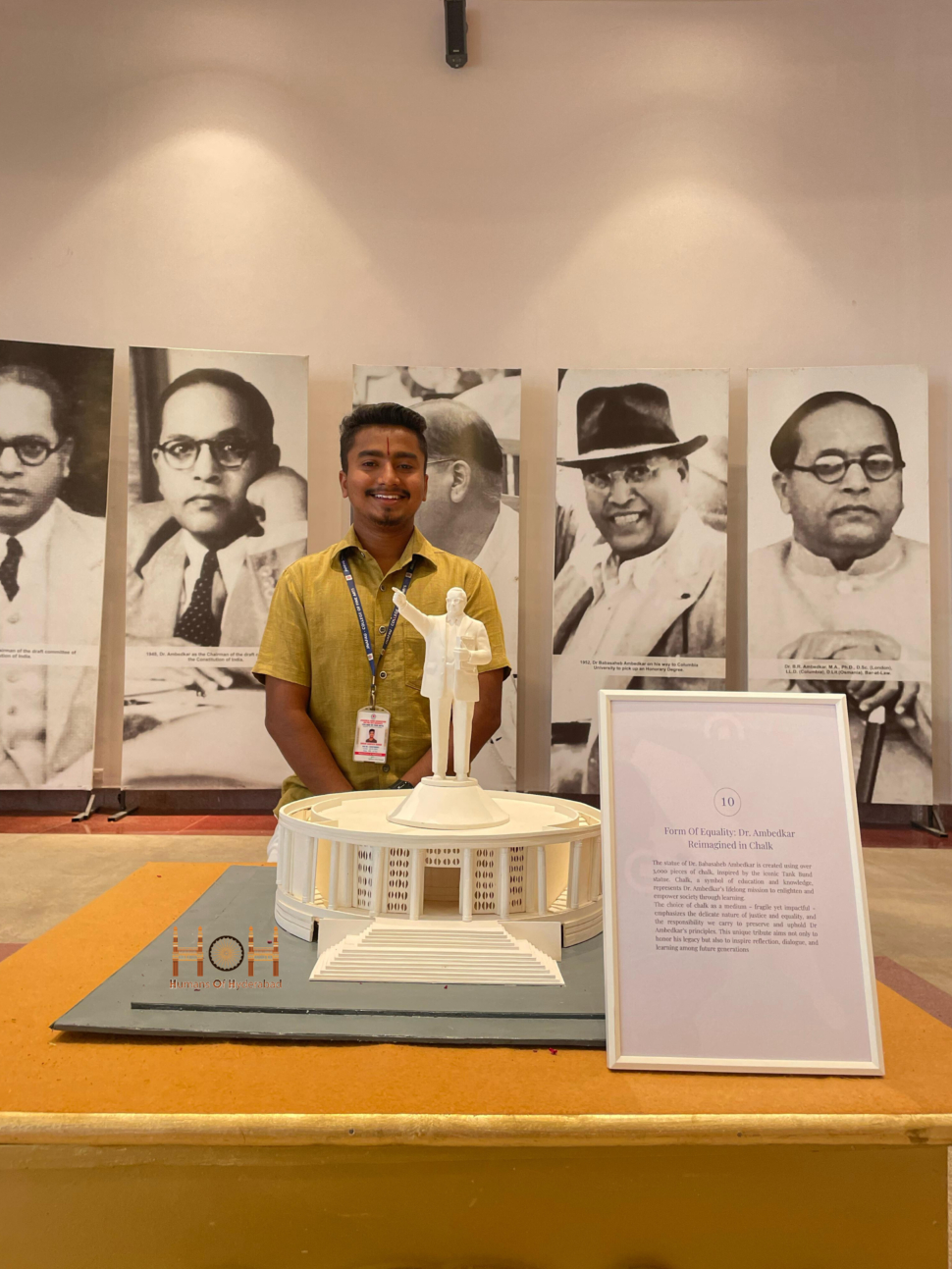
“Most people see a piece of chalk as something that disappears by the end of a school day. I saw it as something worth holding on to.
I grew up in Hyderabad. In my 9th standard, curiosity pushed me to try carving on pencils and broken chalk sticks. There was no plan and no guidance. I simply wanted to see what my hands could do. The chalk broke often, sometimes within seconds. But every break taught me something about pressure, balance, and patience.
What began as simple experimenting slowly turned into discipline. I wasn’t just carving anymore; I was training myself to stay focused. Thousands of chalk sticks didn’t survive, but they taught me lessons no classroom ever could.
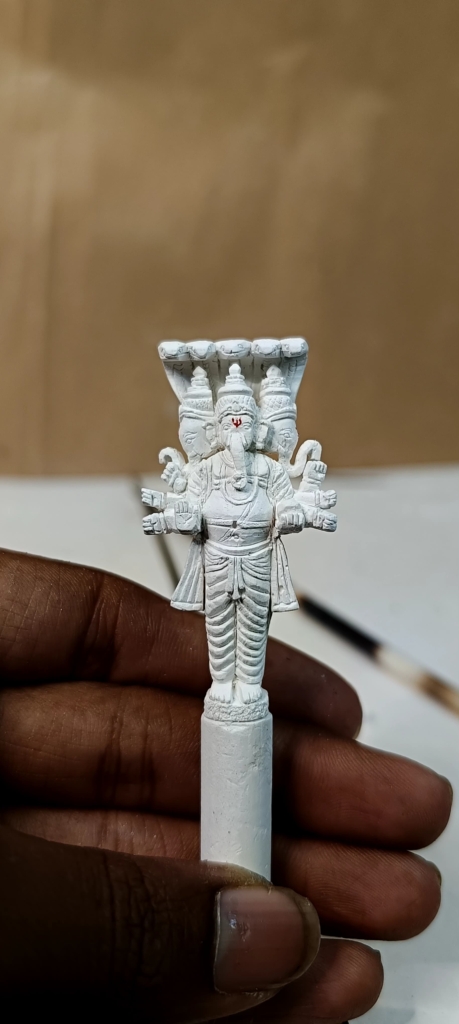
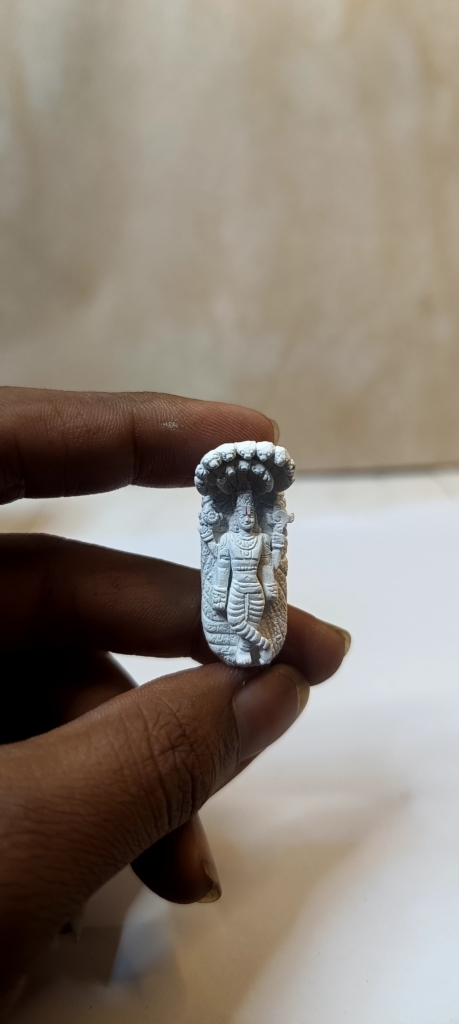
I’m currently pursuing my Bachelor of Fine Arts in Applied Arts at JNAFAU. While my academics focus on design and visual communication, sculpture has always been close to me. Miniature sculpture, especially, is completely self-taught. No syllabus teaches you how to carve a detailed gopuram on a surface that can crumble at any moment. That understanding came only through years of failure, repetition, and quiet persistence.
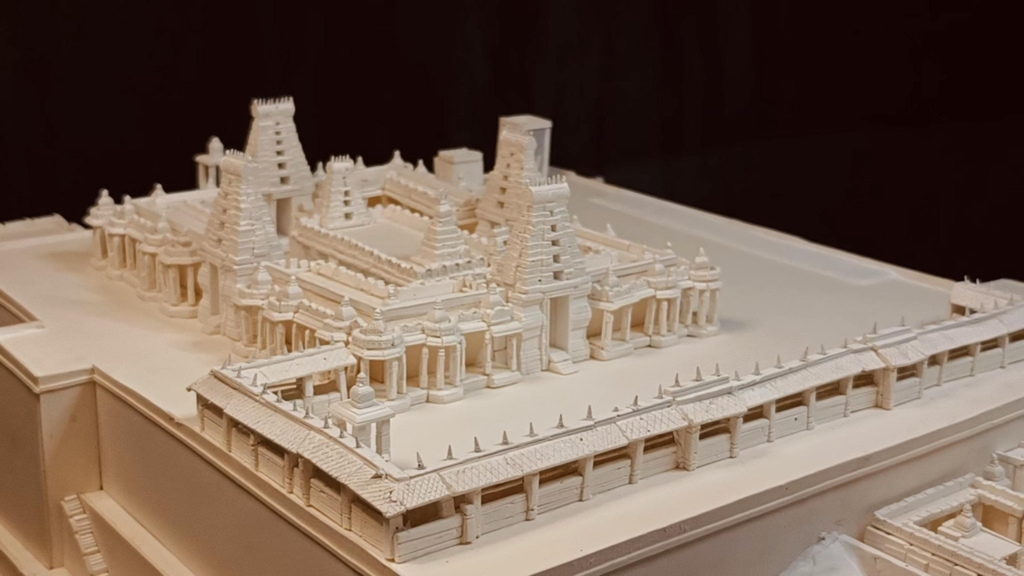
Indian temple architecture gradually became the centre of my work. I was drawn to its scale, precision, and the thought behind every structure. I wanted to capture that vastness in the smallest form possible and show how technically advanced our ancient architecture truly was. Madan Gupta Garu’s documentaries helped me understand temple dimensions and perspectives, while Sri Chaganti Koteswara Rao Garu’s discourses gave me the bhakti and mental strength to sit for thousands of hours with unwavering focus.
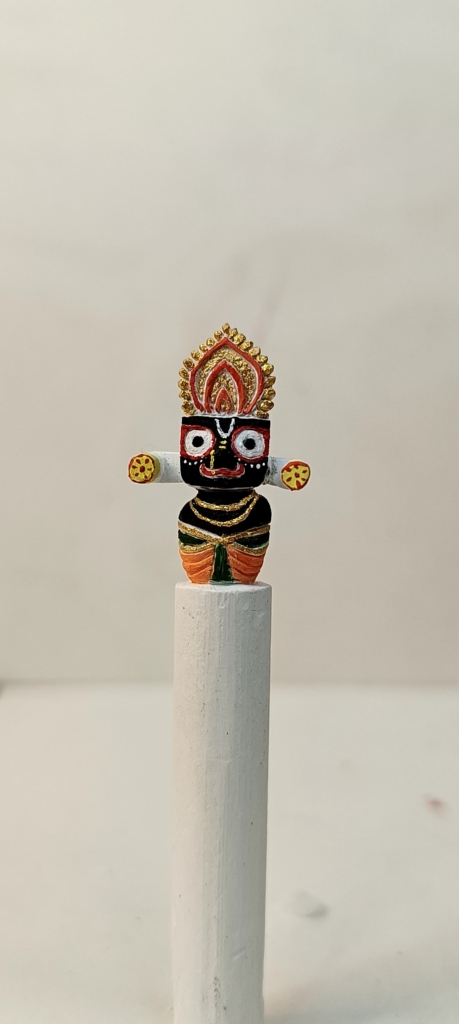
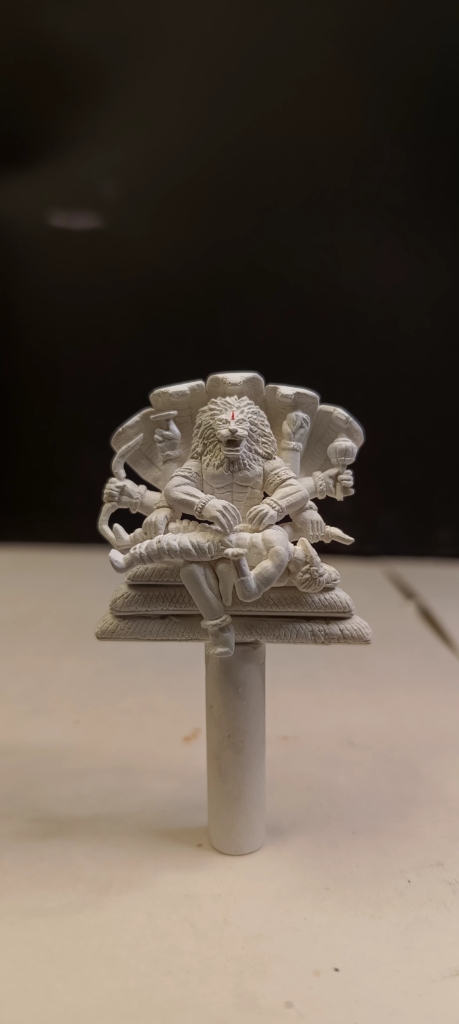
Dravidian architecture deeply influences my work, especially the Chola, Pallava, and Vijayanagara styles. Their gopurams and mandapams demand complete attention. Recently, the fusion architecture of the Sri Swarnagiri Venkateswara Swamy Temple challenged me more than anything before.
My journey into miniature art began with a simple question. How do you hold something as vast as a temple in your hands? I found my answer in the smallest, most fragile material I knew—chalk. Working at a micro scale demands precision. One wrong move can erase hours of work, and that risk shapes every decision I make.
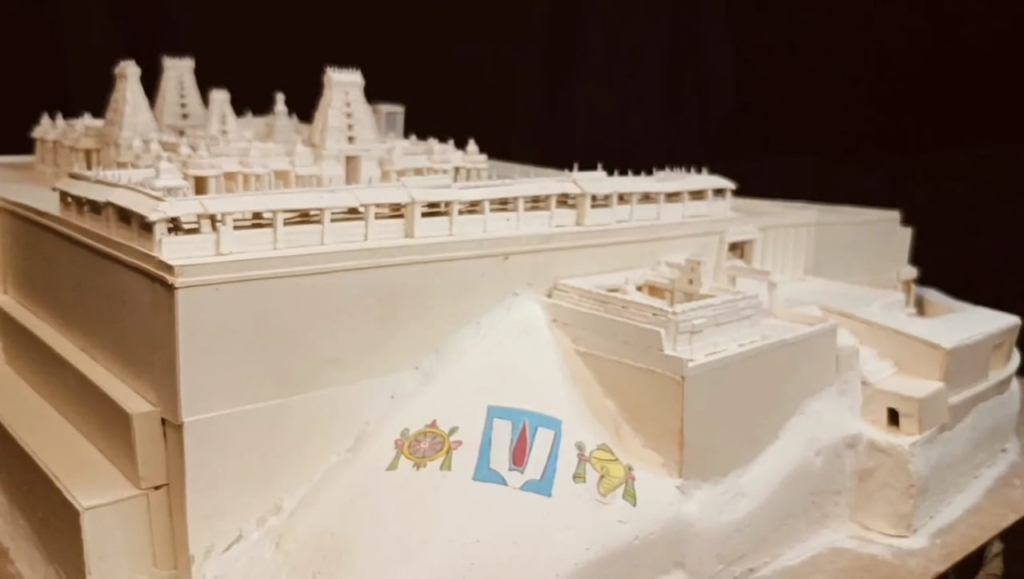
My process is slow and requires a lot of patience. I visit the temple, study its details, take official permission, and then begin carving with just a surgical blade and chalk sticks. I choose chalk for its fragility. Creating something divine from a material that can break anytime feels deeply meaningful to me. The Sri Swarnagiri project alone took 4,370 hours over 245 days and more than 15,000 chalk sticks, most of it done late at night after college.
Breakage is inevitable. Ten hours of work can vanish in a second. When that happens, frustration only distracts you. I pause, breathe, and begin again. Over time, I realised this art is as much about mental strength as it is about skill.
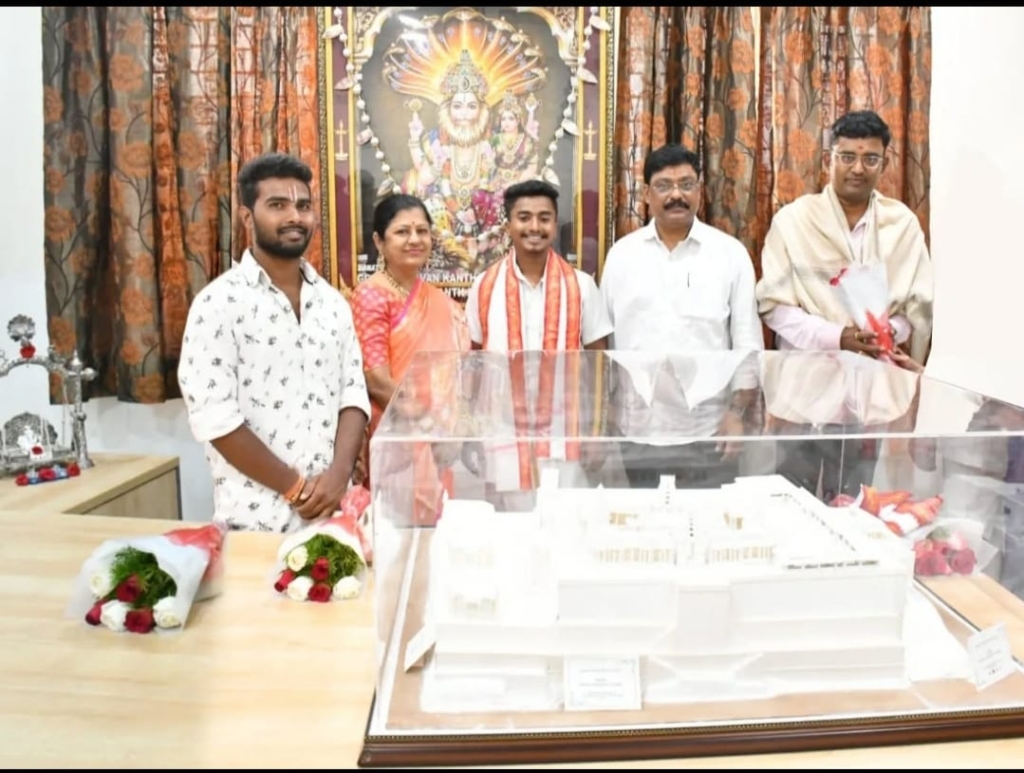
I don’t sell my major temple works. I offer them back to the temples as my seva. I’ve already donated a model to Yadagirigutta, and my Sri Swarnagiri miniature will soon be placed there permanently. When visitors stand silently, trying to understand how something so massive can exist in something so fragile, I feel my purpose is fulfilled.
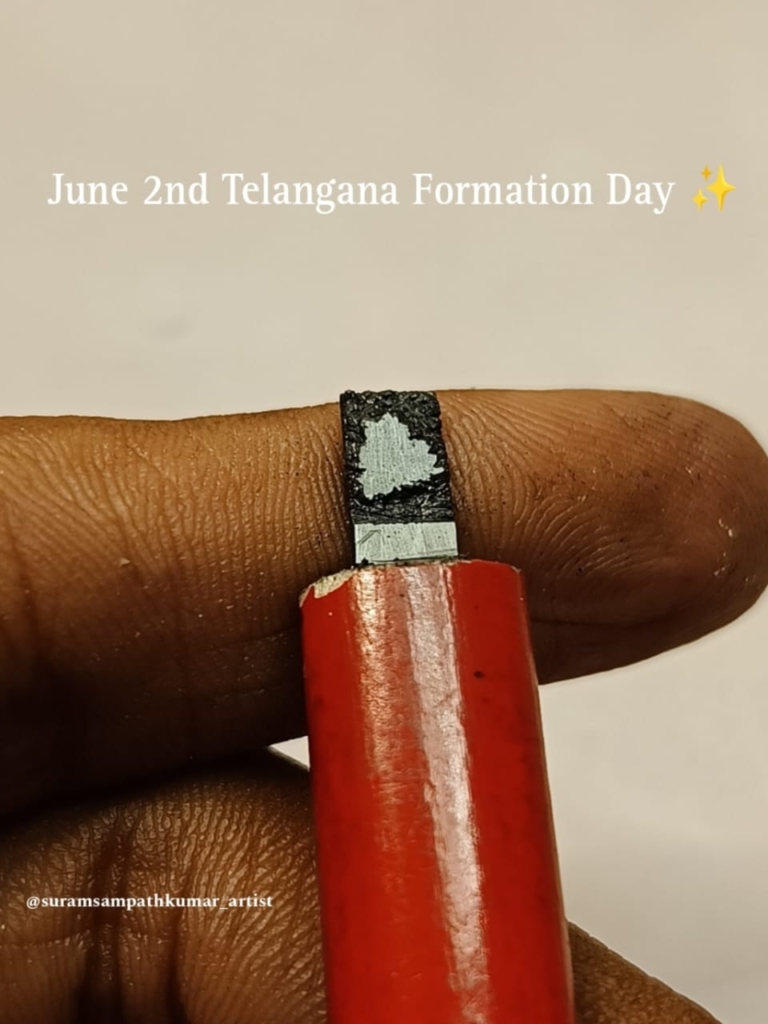
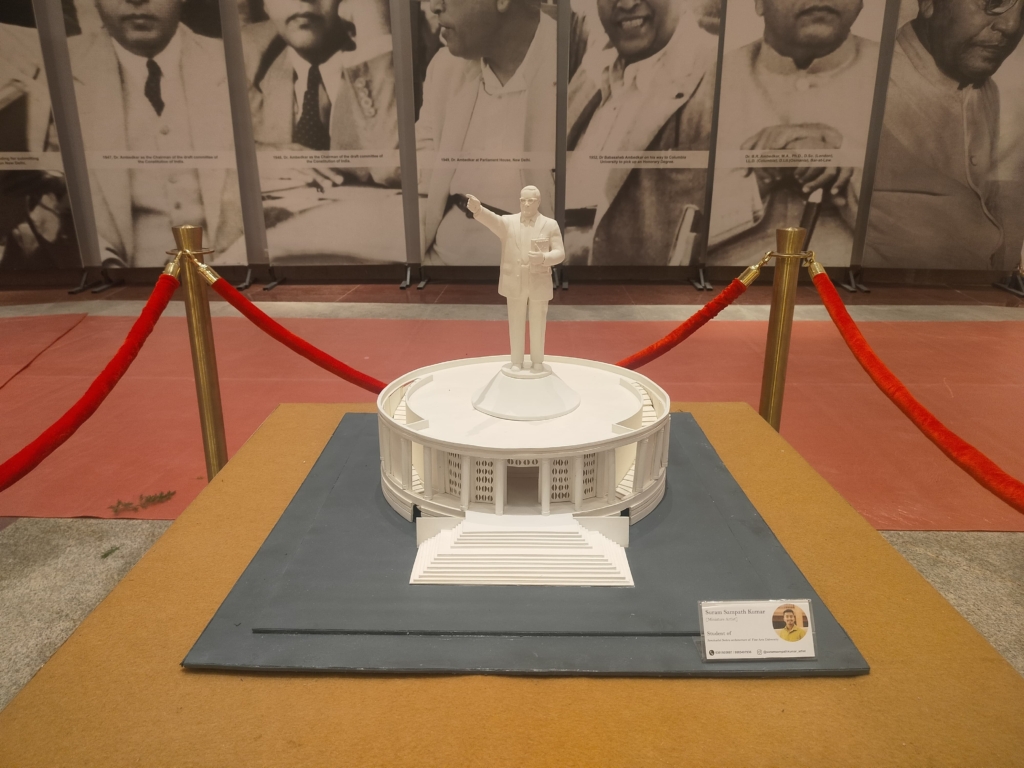
I hold one National and three International records for miniature art. I’ve also created a miniature Ambedkar statue for the museum near Tank Bund. Still, the Sri Swarnagiri Temple is closest to my heart. It pushed me physically and spiritually. I even sourced a miniature gold-plated Sudarshana Chakra from Nepal to place on the gopuram, because some details demand devotion, not compromise.
This journey has taught me that skill alone is never enough. Without patience and bhakti, nothing lasts. On days when my hands were tired and another chalk piece broke, I turned to spiritual discourses for strength. They reminded me why I began.
For me, this isn’t just art.
It’s practice.
It’s an offering.
It’s faith.”
- Suram Sampath Kumar, Miniature Artist