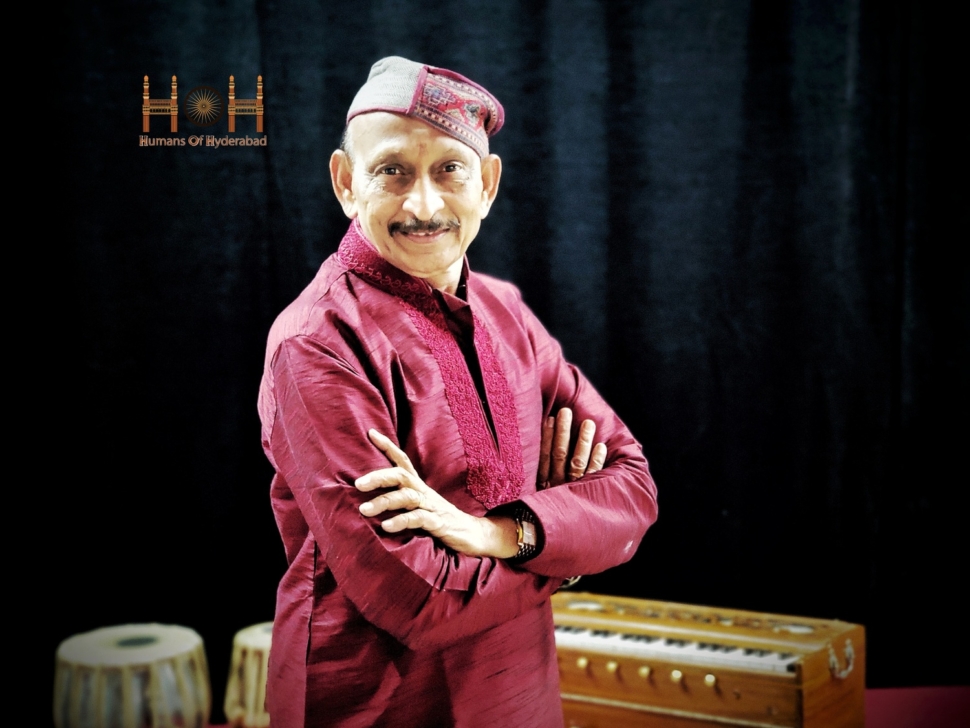
“Kathak literally means to tell a story. So, in every sense of the word, I am a storyteller.
Growing up, there was always this unspoken idea that classical dance wasn’t for men. But I never let that noise reach my ears. It all started with Chhapalapate Nrityam, a regional folk dance I’d perform during Vinayaka Chaturthi in my neighborhood. My mother saw something in me that I hadn’t yet realized. In 1967, she took me to the Music and Dance College in Ramkoti, and for the next five years, I found my life’s purpose under my Gurus, Pandit Ramakrishna Shukla and Pandit Vittal Rao.
After my diploma, the Sangeet Natak Akademi called me to Delhi for advanced training. When I finished, everyone told me to stay there. They said that was where the career was. I was keen on sharing my knowledge of Kathak with people back in my hometown; because it was from my hometown that my roots sprouted.
When I got back to Hyderabad, my friends and I traveled to every tiny town in Andhra Pradesh. People were confused. They’d ask why I was bringing a Northern art form here. We didn’t argue; we just danced. My path wasn’t always easy, but I was lucky to have the encouragement of legends like Dr. Nataraja Ramakrishna to keep me going.
By 1982, I finally opened Kathak Kala Kshetra. It was the first of its kind in South India. Back then, we only had Doordarshan, and I remember the feeling of pride when people started seeing a Kathak performance on TV and instantly associating the dance with my name. Since then, I’ve had the honor of taking this art across the world—even performing for three years in the United States, including at the White House.
For the last few decades, I’ve been working on something very close to my heart: the Deccani Style of Kathak. I took inspiration from the old Deccani Gharanas of the Qutub Shahi era and blended them with traditional techniques. It’s my way of honoring our local history. Whether I am representing India at UNESCO’s International Dance Council or teaching a new student in Hyderabad, my goal remains the same.
At the end of the day, these aren’t just performances. These stories come from our sacred texts and our culture.”
- Dr. Anju Babu