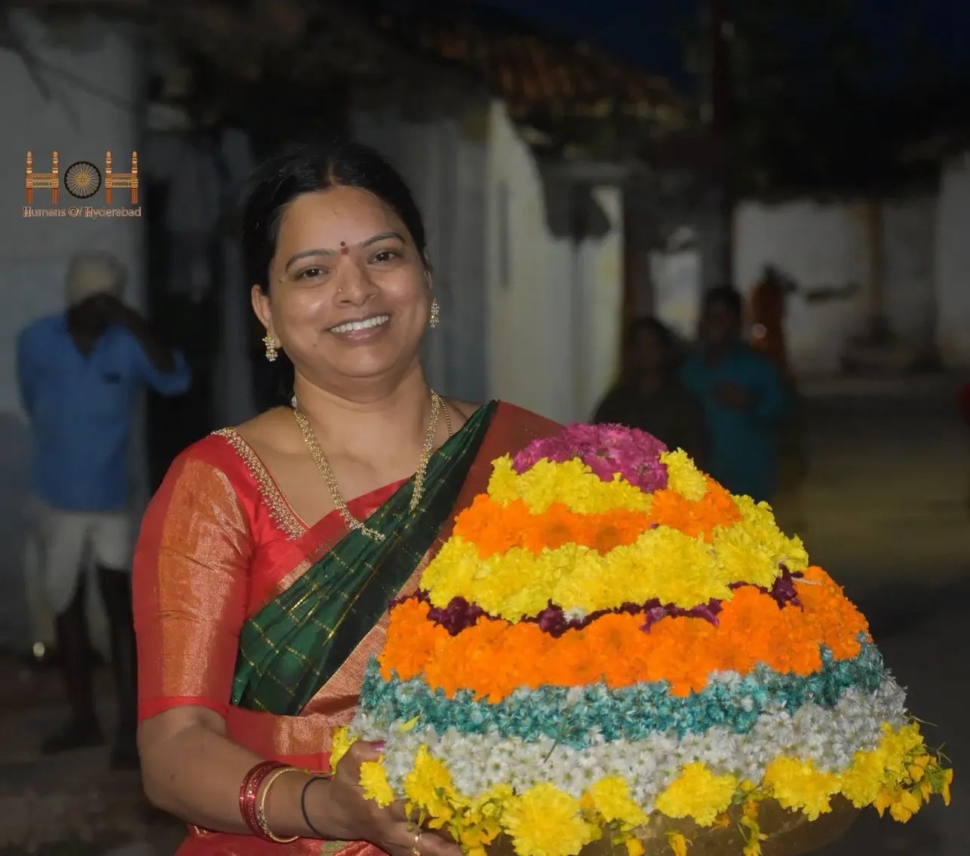
“Growing up in Telangana, we would wait all year for the nine days of Bathukamma. It was when our family came together, cousins and relatives visited, and our homes filled with flowers, songs and laughter.
Every year, we had friendly competitions to see whose Bathukamma looked the most beautiful. We paid attention to its size, colours and the way the flowers were arranged. There was so much excitement around it. We woke up before sunrise, dressed in traditional clothes and performed the puja before having even a sip of water. Our homes would be filled with the fragrance of flowers as we sat together preparing the Bathukamma.
I especially remember the evenings when we took our Bathukammas to the nearest water body. My grandmother and the other elders would sing traditional Bathukamma songs while we gathered around them. Those evenings were special because the whole family was together, doing what we had grown up seeing our elders do.
Bathukamma is more than a flower festival for us. It is a prayer for our families’ well-being and a celebration of womanhood, nature and togetherness. Flowers such as Tangedu, Gunugu, Chamanthi and Banthi are part of it. We would gather seasonal flowers from fields and gardens, each adding a different colour to our Bathukamma.
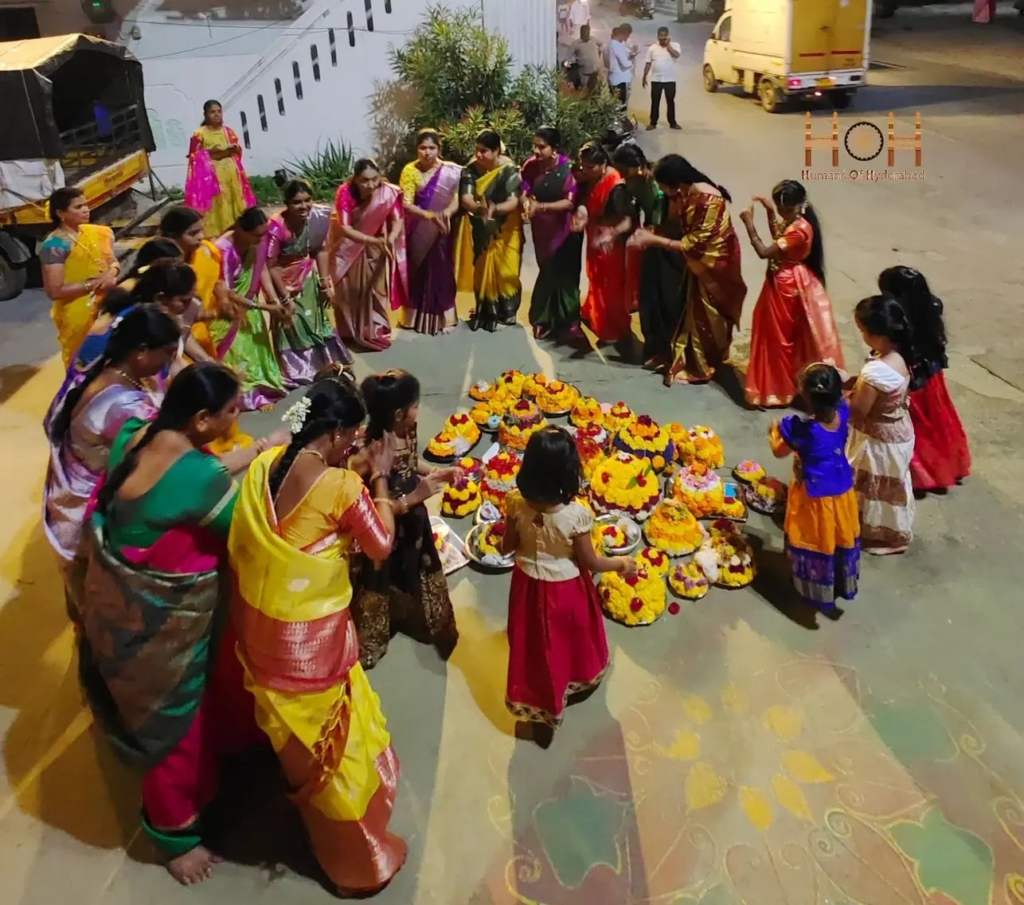
Over the years, many of us moved to cities, but we continued celebrating Bathukamma at home. Whenever the festival comes around, I am reminded of those days in our childhood, when preparing the flowers and singing together were as important as the festival itself.
Today, on Engili Pula Bathukamma, the first day of the festival, people across Telangana begin nine days of celebrations. Families and friends come together to arrange flowers and sing the songs passed down by their elders.
I hope the younger generations get to experience Bathukamma the way we did, sitting with family, learning the songs and understanding why we celebrate it. These are traditions we grew up with, and I would love to see them remain part of their lives too.”