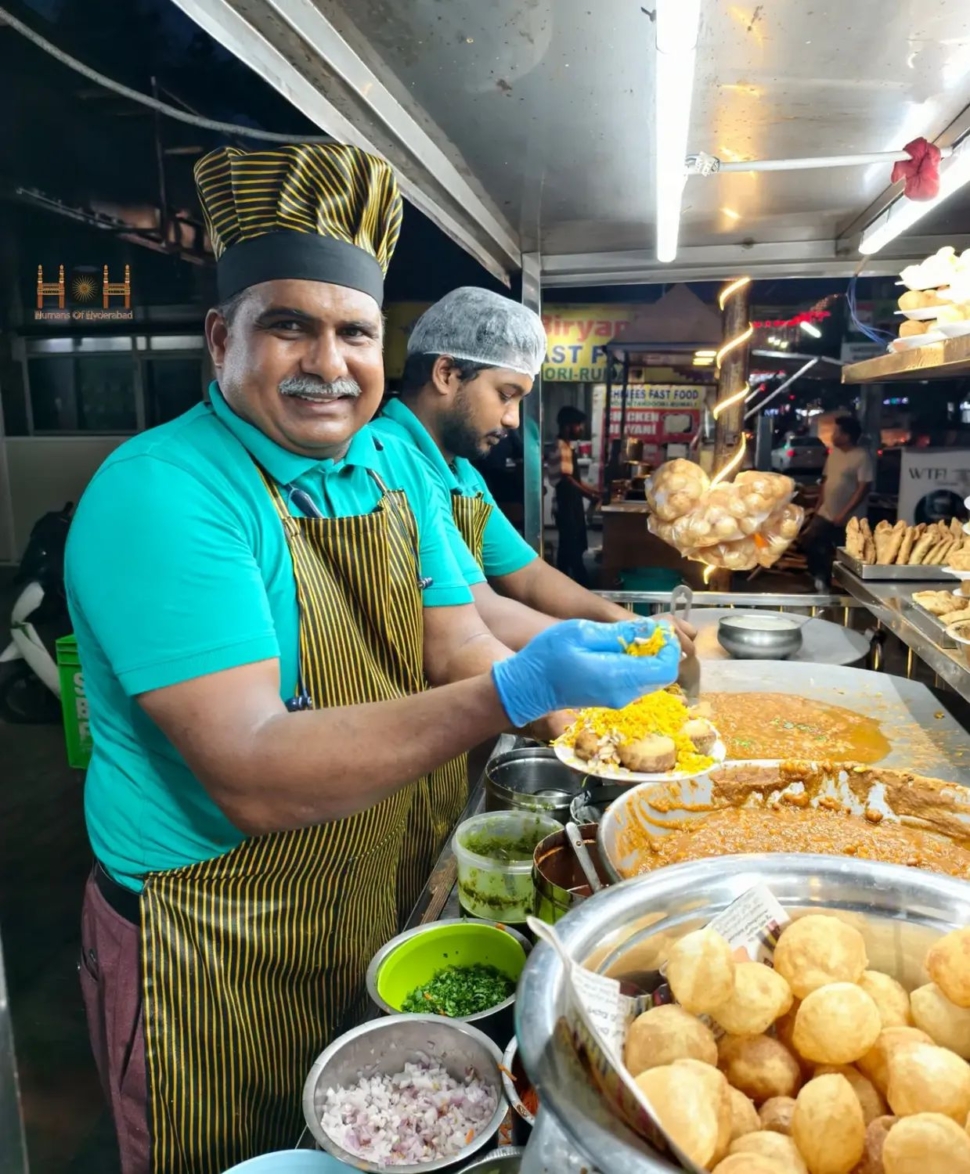
“I came to Hyderabad from Ballari in 1989 with very little in my hands. I had studied only till Class 6, so once I started working, life itself became my teacher.
I began at roadside idli bandis, learning to cook as I worked. From 1991 to 1995, I worked under my guru, Narasimha Goud, near Begumpet Airport. We ran a small tiffin stall in the mornings, and in the evenings, I worked at his pani puri bandi. That was where I learnt something more important than recipes.
My guru always said, ‘Customer is God.’ He taught me to greet everyone with respect, speak politely and never look down on anyone who walked into the shop. I realised that people might come for the food, but how you treat them gives them a reason to return. Even today, that is the principle I value most.
In 1996, I started my own chat business in Malkajgiri. Things did not go as planned. My tiffin business struggled, and later, managing multiple stalls brought its own difficulties. There were losses and stressful periods when keeping the business running was a challenge. But I learnt that opening a business is one thing; sustaining it through difficult times is another. You have to be patient, learn from what goes wrong and keep improving.
Over the years, Bhavani Chat Bandar, ECIL, began earning its own recognition. We still prepare almost everything ourselves, from pani puris to sev. I believe customers can recognise the difference when food is made with care. Cutting corners might save something today, but earning someone’s trust over the years is far more valuable.
For me, one of the biggest rewards has been seeing my children study and build their own futures. I could not continue my education, but all four of them studied well. One of my daughters works at IBM, another is pursuing her degree, and my sons now help me manage the business. Their progress makes all those years of hard work worthwhile.
I have learnt that a business is not built only on what you sell. It is built on the trust you earn, the quality you maintain and the way you treat people, especially when times are difficult.”
— M. Srinivasulu