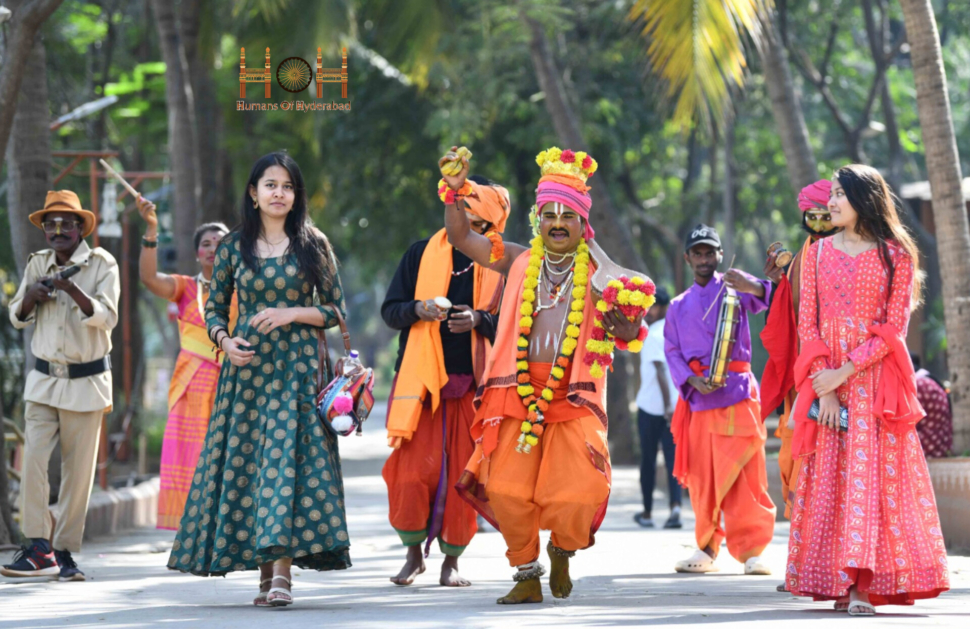
Shilparamam hosts Sankranti Sambaralu every year as part of its seasonal cultural calendar. The festival brings together rural art forms, traditional crafts, folk music, and harvest rituals from across Telangana and Andhra Pradesh. Visitors get to witness practices that usually happen in villages during Sankranti — from Gangireddu performances to Haridasulu, Gobbillu, and handicraft stalls.
This event serves as a city-space window into rural culture, giving performers a platform and helping preserve these traditions.
“For most of the year, we depend on agriculture,” one performer says. “Some of us cultivate small patches of land, others work as labourers. During Sankranti, we travel as a community.”
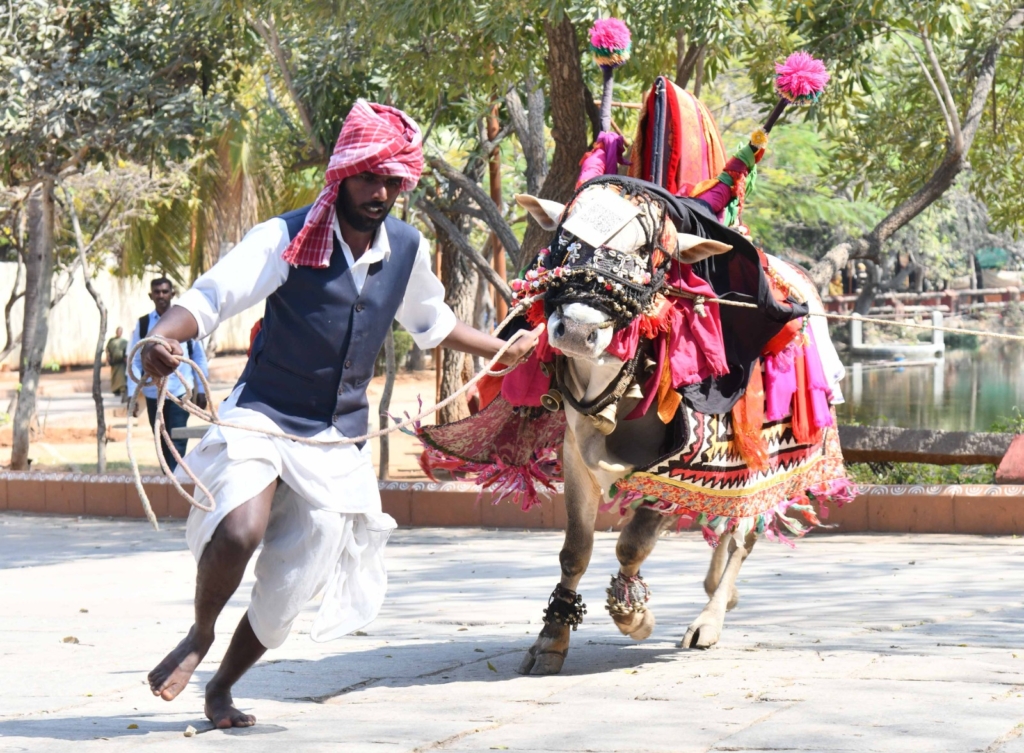
In every village, the Gangireddu — decorated with turmeric, painted horns and flower garlands — leads the procession. Performers sing folk songs rooted in agrarian life: rains, crops, cattle, household well-being. At each doorstep, the bull lowers its head, a gesture families believe brings prosperity for the coming year. In return, households offer rice, grains, vegetables or modest amounts of money.
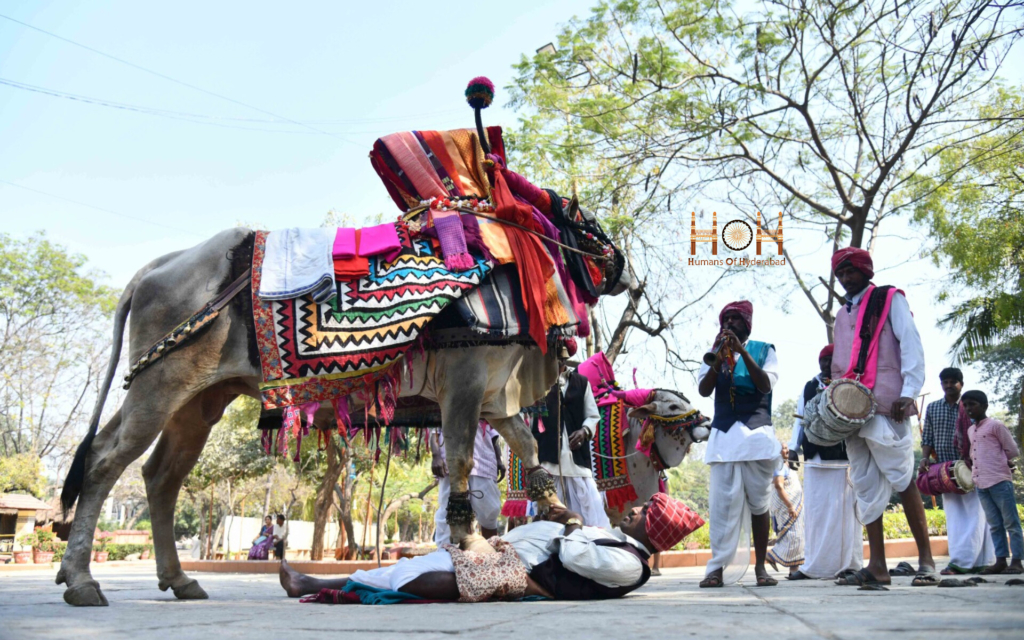
“There is no fixed amount,” another member explains. “People give based on their harvest that year.”
At the end of each day, the group pools the offerings. Feed for the bulls and cattle is set aside first; the remaining income is shared among the families. “It helps us manage expenses for a few months,” an elder says, “though it does not replace our regular work.”
Kanuma, the day dedicated to cattle, is central to their calendar. The animals are bathed, turmeric is applied and sweet pongal from the new crop is offered to them. “They work with us through every season,” a farmer notes. “Kanuma is for them.”
After the festivities, community members return to their routines — farming, labour work, or other daily-wage jobs. The cattle return to their owners for ploughing or are kept in sheds until the next season.
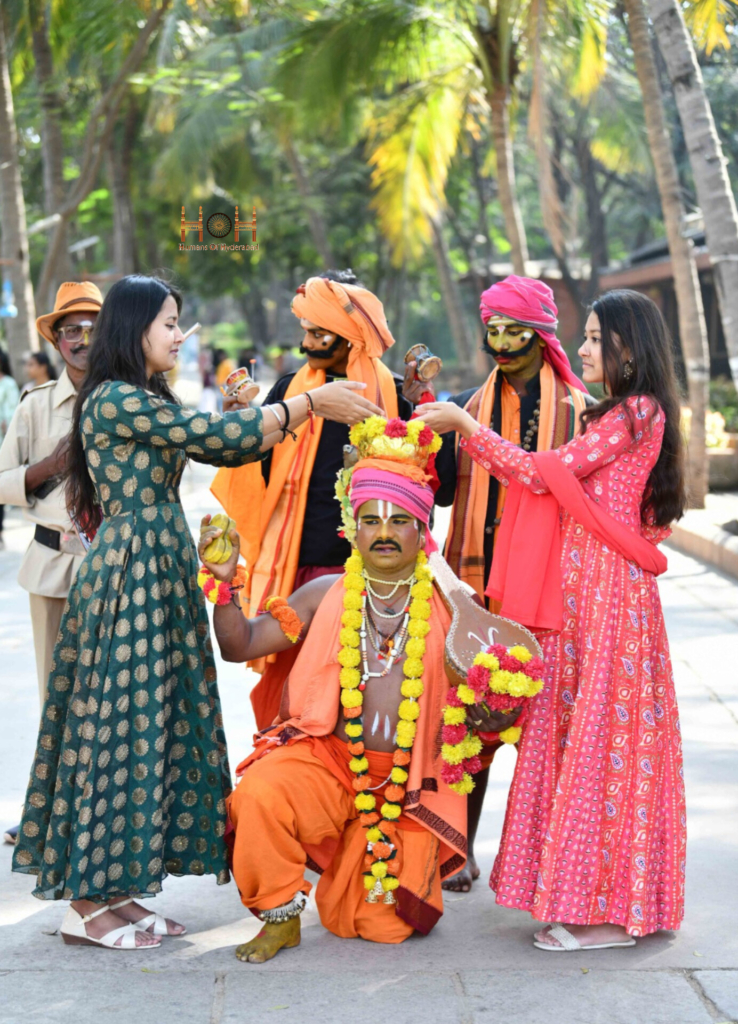
During Sankranti, their paths often cross with Haridasulu, who travel through the same stretches singing Vishnu keertanalu. “The routes are the same, even if our traditions differ,” a performer says.